
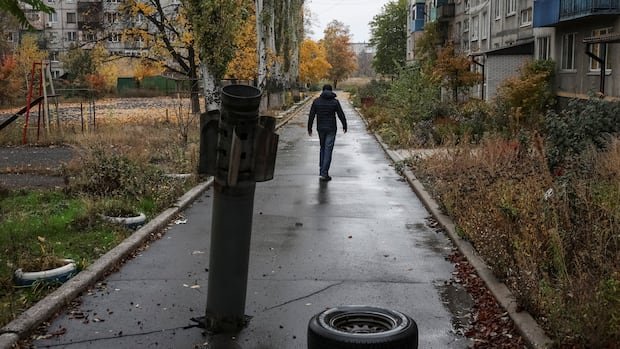

Plumes of smoke ascend from numerous sites, while buildings lay in ruins and many residential structures exhibit significant damage from Russian glide bombs. The populace of Dobropillia, a coal-mining town near the front line in Ukraine’s eastern Donbas region, scurry to secure provisions under the constant surveillance of drones dominating the battlefield.
On a gloomy mid-October day, adverse weather served as one of the few defenses against the drones incessantly patrolling the skies as Russia aims to conquer the few remaining cities in the region still resisting.
Viktoriya Sergeeva, proprietor of one of the town’s surviving supermarkets, relocated from Pokrovsk, a city around 30 kilometers to the south. She recounted, “My parents insisted on staying there, so I stayed with them until they were both killed a few weeks ago.”
Refugees like Sergeeva have contributed to the population of Dobropillia, which has dwindled to less than 1,500 residents, down from 28,000 in 2022 before the Russian incursion.
Russian soldiers, acting solo or in pairs, now patrol the streets after infiltrating Ukrainian lines, marking a stark shift in the once recognizable battlefield that has morphed into a complex and fluid conflict zone.
Dobropillia, along with Pokrovsk and Myrnohrad, now represents one of the most intense fronts in the ongoing war. Russia is intensifying efforts to seize control of the area, and a significant portion of Ukraine’s military resources are concentrated here, including a highly esteemed infantry brigade whose exact location remains confidential.
Away from the immediate front, the brigade’s soldiers and leaders stationed at a field camp discuss the evolving conditions on the ground and the challenges faced by both sides in the conflict.
“The concept of a traditional front line no longer applies,” remarked Psycho, a deputy commander within the unit. “We now navigate a ‘front zone’ where our forces and theirs are intermingled in small groups across various locations.”
The soldiers, using call signs or first names per Ukrainian military regulations, highlight the relentless nature of Russian offensives and the ongoing struggle to defend against advancing enemy forces.
In the initial phases of the conflict, Russia relied heavily on armored vehicles and artillery, but with depleted stockpiles, the focus has shifted to infantry supported by drones to breach Ukrainian defenses.
The proliferation of drones has necessitated smaller unit sizes, with larger groups risking immediate detection and targeting. Ukrainian troops now face difficulties reaching their defensive positions, often covering long distances on foot while evading detection. Resupply operations are conducted via drone drops to sustain troops in forward positions.
Ukrainian forces are continually developing countermeasures to combat the drone threat, with a focus on innovative solutions to neutralize this emerging challenge.
Maintaining aerial surveillance and utilizing drones for tactical advantage are pivotal strategies for Ukrainian commanders in navigating the dynamic battlefield environment. Real-time drone feeds assist in identifying and neutralizing threats, enhancing operational effectiveness.
The toll of the conflict is evident in the staggering losses incurred by Ukrainian forces. Despite well-equipped facilities and amenities, the brigade faces a high casualty rate, underscoring the sacrifices made by soldiers in the line of duty.
The emotional burden on commanders is profound, as they bear the weight of decisions that impact the lives of their troops and the anguish of families awaiting news of their loved ones’ fates.
While casualties on both sides are substantial, the human cost of the conflict is starkly apparent, with thousands of lives lost and communities devastated by the relentless warfare.
As the conflict in Ukraine continues to unfold, the resilience and valor of those on the front lines stand as a testament to the enduring spirit and determination in the face of adversity.