
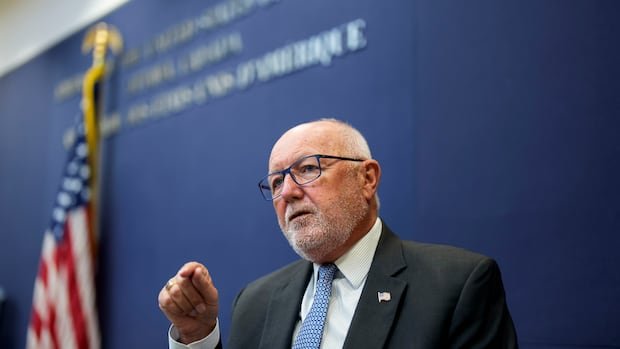

U.S. Ambassador to Canada Pete Hoekstra has sought to minimize concerns regarding the potential impact of America’s new national security strategy on backing political movements in Canada. The strategy affirms that the U.S. government will support entities that are in line with its principles and strategy.
During an extensive year-end interview with The Canadian Press, Hoekstra suggested that the language in the national security document is open to broad interpretations. He emphasized the need to observe how the situation unfolds, noting the document’s flexibility in interpretation.
Although Hoekstra indicated that the U.S. is unlikely to interfere in domestic politics, he criticized Ontario for airing an advertisement on American television networks that quoted former U.S. president Ronald Reagan criticizing tariffs. He viewed this move as a targeted political intervention against the current president.
Former diplomats and critics caution that the new strategy could pave the way for American interference in Canada’s internal affairs. Bob Rae, a former Canadian ambassador to the United Nations, expressed concerns in Policy Magazine that the U.S. government might actively support political parties and movements in Canada aligned with Trumpian policies.
Artur Wilczynski, a former Canadian diplomat, described the document as “deeply problematic” and suggested that it could signify U.S. backing for groups in Canada supporting Trump’s agenda, potentially affecting Canada’s systems and relationships. Wilczynski highlighted the document’s implications for various aspects of Canada’s governance and sovereignty.
Hoekstra asserted that the Canada-U.S. relationship has evolved beyond past tensions, emphasizing improved ties between the two nations’ leaders. He cited light-hearted interactions between President Trump and Prime Minister Trudeau as evidence of the positive rapport.
Stephanie Carvin, an international relations professor at Carleton University, expressed unease about the national security strategy’s implications for America’s allies, including Canada. She highlighted the potential for leveraging elements of Trump’s support base in influencing Canadian political movements, raising concerns about external influences on domestic affairs.
Carvin pointed to the involvement of American donors in the Freedom Convoy protests and the endorsement of the movement by Donald Trump Jr. as examples of external influences on Canadian political dynamics.