
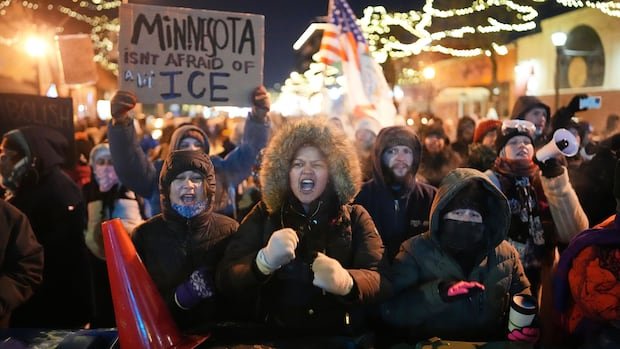

Vice-President JD Vance recently expressed surprise at the relative calm in cities facing immigration enforcement crackdowns, contrasting them with Minneapolis, where a fatal shooting involving a federal immigration officer occurred. Vance suggested that the city’s unique situation might be a contributing factor and encouraged local authorities to collaborate with federal immigration enforcement efforts.
The historical context of Minnesota’s rich tradition of protests dating back to the late 19th century sheds light on the current events in Minneapolis. Retired labor history professor Peter Rachleff drew parallels between the ongoing situation in the city and the 1934 labor strike, known as Bloody Friday, which resulted in the passing of significant labor laws.
Minnesota’s deep-rooted pro-labor stance was evident in a recent march against Immigration and Customs Enforcement (ICE), where thousands rallied in support of labor rights. This tradition traces back to historical labor actions, such as the Great Northern Railroad Strike of 1894, which paved the way for national labor reforms.
The Teamsters strike in Minneapolis in 1934, marked by police violence resulting in fatalities, served as a turning point in labor organizing. The deaths of protesters sparked widespread support for the labor movement and ultimately led to the fulfillment of their demands.
The city’s history of integrated community organizing, exemplified by various civil rights movements in the 1960s, mirrors the current collaborative efforts in anti-ICE protests. Today, volunteers from diverse backgrounds work together to protect vulnerable communities through neighborhood watches and support initiatives.
The legacy of protests in Minneapolis was reignited in 2020 following the killing of George Floyd, fueling a renewed wave of activism and grassroots organizing. This momentous event continues to inspire a new generation of activists who utilize various forms of protest to advocate for social change.
The ongoing movement in Minnesota reflects a diverse and inclusive approach to activism, where individuals of all backgrounds can contribute in meaningful ways to effect positive change in their communities.