
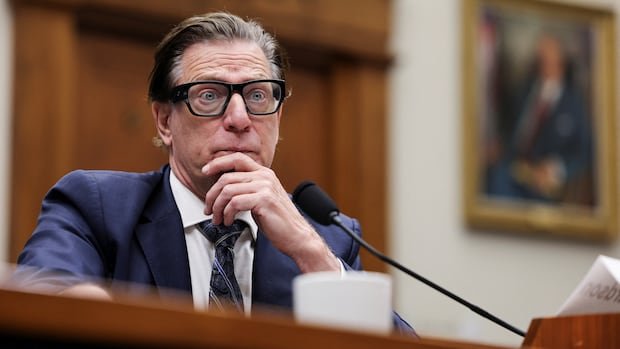

The head of the U.S. Federal Emergency Management Agency (FEMA) who was serving in an acting capacity has stepped down from his position after a short tenure of six months, as confirmed by the U.S. Department of Homeland Security (DHS). This departure marks the latest in a series of significant staff changes, budget cuts, and policy shifts within the agency responsible for coordinating federal disaster response efforts.
David Richardson, who took over from the previous acting head Cameron Hamilton in May, faced criticism for his management of the fatal Texas floods earlier in the year. While Richardson remained mostly behind the scenes during his term, a FEMA employee disclosed to The Associated Press that he resigned, although the official reasons for his exit were not commented on by the DHS.
Acknowledging Richardson’s service, a DHS spokesperson expressed gratitude for his commitment and wished him success in his future endeavors. Richardson, a former U.S. marine officer with experience in Iraq and Afghanistan who also oversaw the DHS Countering Weapons of Mass Destruction Office, lacked prior emergency management background before assuming the FEMA role.
Following his appointment, Richardson pledged to support President Donald Trump’s agenda of shifting more disaster recovery responsibilities to individual states, emphasizing a proactive approach to overcoming any internal resistance to this mission. However, his leadership capabilities were questioned by lawmakers and FEMA personnel, particularly regarding his delayed on-ground presence after the Texas floods and allegations of slowed response due to stringent expenditure approval protocols.
Karen Evans, FEMA’s chief of staff and a former cybersecurity official, is set to take over the administrator role starting December 1, as DHS announced. Despite legal requirements mandating emergency management experience for the FEMA administrator, the Trump administration has employed temporary leaders to navigate around these prerequisites.
Throughout this year, FEMA has undergone significant transformations following Trump’s return to office, with a substantial percentage of permanent staff departing and key policy changes impacting the agency’s operations. The administration’s actions include reducing mitigation funding, imposing immigration-related conditions on preparedness grants, and rejecting multiple states’ pleas for major disaster declarations.
An appointed council led by Homeland Security Secretary Kristi Noem and Defense Secretary Pete Hegseth is tasked with proposing reforms to FEMA, focusing on devolving more disaster-related responsibilities to individual states. Set to unveil its recommendations in December, the council aims to reshape FEMA’s structure and operational framework in alignment with the administration’s objectives.