

Twenty years ago, an agreement was made to construct a pipeline connecting Alberta’s oilsands to the northern coast of British Columbia. Referred to as the Gateway Pipeline, this initiative aimed to transport Alberta’s growing oilsands production to meet the rising demand in China. Enbridge, based in Calgary, and PetroChina, a state-owned company, signed a memorandum of understanding in 2005 to transport up to 400,000 barrels of crude oil per day over 1,160 kilometers from northern Alberta to a terminal on British Columbia’s northern coast.
The project faced delays and setbacks, with PetroChina withdrawing its support in 2007. Despite this, Enbridge continued its efforts, leading to a decade-long debate involving economic, environmental, and constitutional issues. The project, later renamed Northern Gateway, sparked protests, legal battles, and political controversies, with global attention on Canada’s handling of the matter.
As a new memorandum of understanding is signed between Ottawa and the Government of Alberta for a revised pipeline plan through British Columbia, it reignites a national discussion reminiscent of the Northern Gateway proposal’s rise and fall.
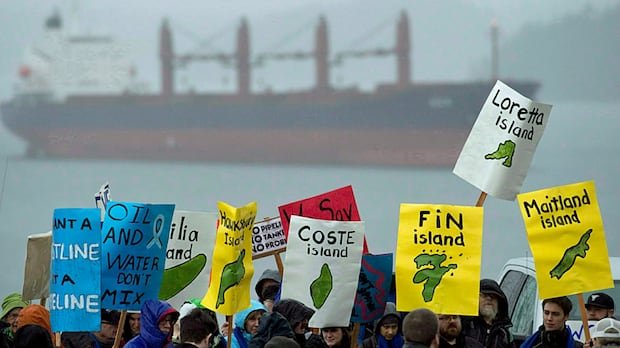
The regulatory process for Northern Gateway began officially in December 2009, with terms of reference issued for review by the National Energy Board and Canadian Environmental Assessment Agency. Enbridge submitted its project application in May 2010, initiating a series of regulatory hearings that drew widespread public engagement and opposition, particularly from Indigenous groups concerned about environmental impacts.
The project faced further challenges in 2012 when Enbridge experienced oil spills in the U.S., raising safety and environmental concerns. Public sentiment turned against the pipeline proposal, leading to political scrutiny and increased resistance.
Despite receiving regulatory approval with conditions in 2013, the project’s fate was sealed when the Federal Court of Appeal overturned the approval in 2016 due to inadequate consultation with affected First Nations. The subsequent rejection by Prime Minister Trudeau’s government signaled the end of the Northern Gateway project, contrasting with the approval of other pipeline ventures.
The aftermath of the project’s demise saw mixed reactions, with some celebrating the defeat of Northern Gateway while others lamented lost opportunities for economic development. Indigenous communities, in particular, grappled with the project’s cancellation after having expectations of economic benefits. The project’s failure left lasting impacts on various stakeholders, reflecting the complex dynamics of energy development and environmental concerns in Canada.