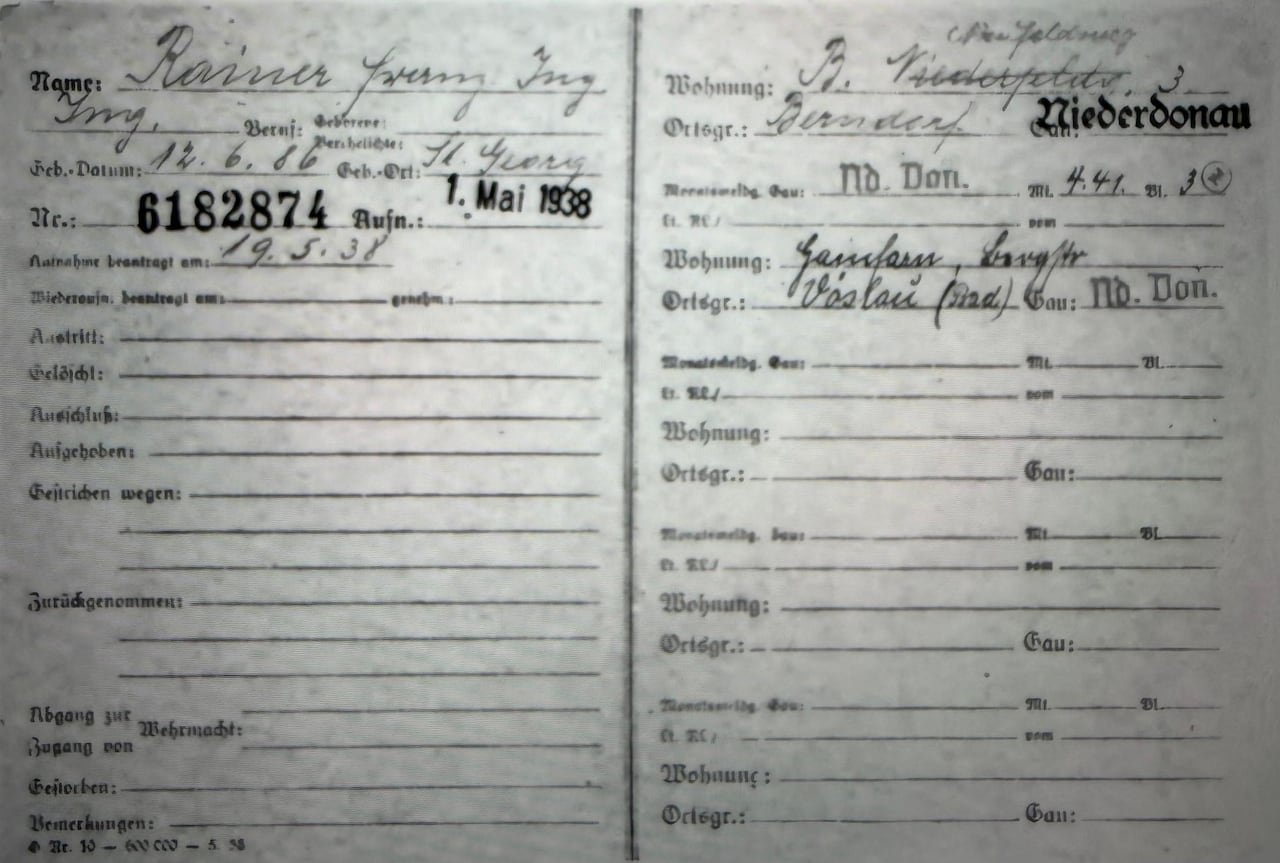



Christian Rainer quickly confirmed his suspicion that his grandfather was affiliated with the Nazi Party after using an online database. Rainer, a journalist from Vienna, Austria, recently utilized a new online tool to search through numerous Nazi Party membership cards, revealing that his grandfather, Franz Rainer (1886-1961), joined the party on April 21, 1938, shortly after Germany annexed Austria.
Rainer, who had knowledge of his family’s right-wing background in southern Austria with possible anti-Semitic leanings, shared that the discovery did not come as a surprise. Having never met his grandfather, who passed away before his birth, Rainer expressed relief that his father, born in 1922, was not found in the database.
Developed by the German newspaper Die Zeit, the search tool accessed millions of member index cards initially digitized and released online by the U.S. National Archives in March. Prior to this, accessing such information required requests to the U.S. National Archives or German Federal Archives and was not available online.
Christian Staas, head of Die Zeit’s history department, highlighted the challenges posed by the U.S. archives’ search process, including a previous website crash due to high traffic. The decision to create a more user-friendly search tool stemmed from this experience, aiming to make these records easily accessible to all.
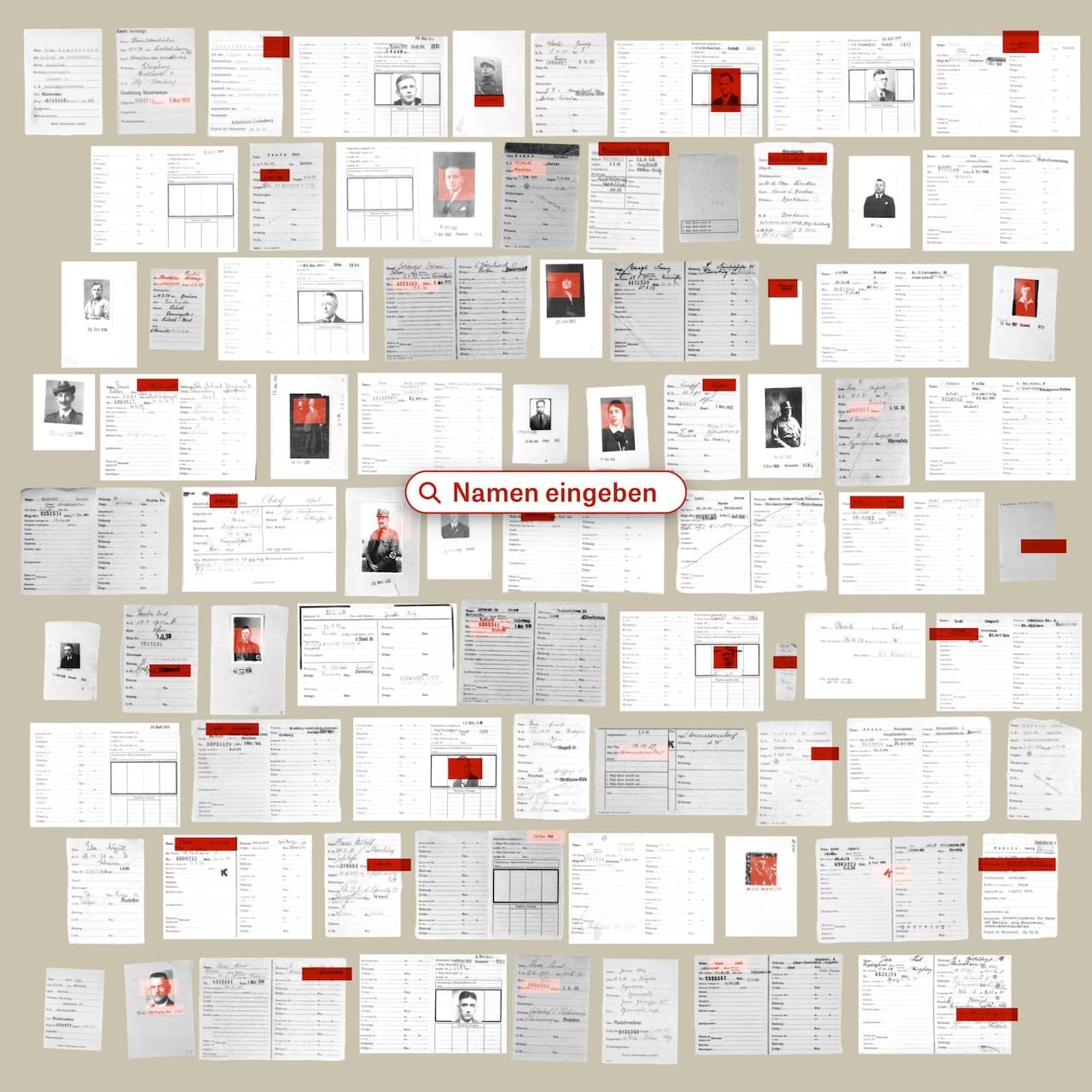
Since its launch in early April, millions of users have utilized the database, sharing a range of emotional responses. Some individuals expressed relief upon confirming suspicions about family members, while others were shocked to uncover previously unknown information about their ancestors.
The database, comprising 8.2 million names, covers approximately 90% of former Nazi Party members. However, some data gaps exist, and the newspaper warns that results generated through artificial intelligence may be incomplete or contain errors.
During the years of Nazi rule from 1933 to 1945, millions of Jews and members of persecuted groups fell victim to the Holocaust.
‘It could happen anywhere’
Rainer encourages individuals to explore the search tool, emphasizing that many Nazis relocated to countries like the U.S. and Canada during and after World War II. He notes that this search is not about assuming guilt for past crimes but rather about acknowledging historical truths.