
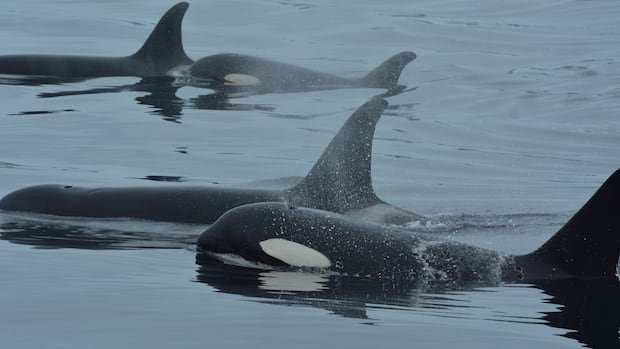

A recent study on northern resident orcas off the coast of B.C. took an unexpected turn when Pacific white-sided dolphins made an appearance, initially frustrating one of the researchers involved. The research team, comprising Dalhousie University, the University of British Columbia (UBC), the Leibniz Institute, and the Hakai Institute, was focused on understanding the foraging behavior of northern resident orcas compared to the struggling southern resident population.
Although the dolphins were not part of the study’s original scope, they provided valuable insights into their collaborative hunting relationship with the orcas, as detailed in a new research publication in Scientific Reports. Contrary to popular belief that dolphins are nuisance fish stealers, the study revealed that the dolphins actively assisted the orcas in hunting Chinook salmon by communicating with them on deep dives.
Lead author Sarah Fortune, an assistant professor of oceanography at Dalhousie University, highlighted that the dolphins actively participated in the hunting process by diving deep and chasing salmon, debunking the notion of them being mere opportunistic feeders. Videos captured during the study showed orcas following dolphins on dives, suggesting a coordinated effort in locating prey.
Through echolocation signals, the orcas were able to track the dolphins’ scouting activities for salmon in a wider area than they could search individually, leading to successful hunts. The researchers observed instances where the orcas shared their catch with other members, allowing the dolphins to feed on leftover scraps, which served as their reward for contributing to the hunt.
The study, conducted over two years in 2019 and 2020 in various locations in B.C., involved tagging the orcas to gather underwater footage. By analyzing the data retrieved from the tags and drone videography, researchers gained insights into the intricate dynamics of the orca-dolphin partnership during hunting expeditions.
The observations made during the study shed light on the collaborative nature of these interactions in the wild, emphasizing the interconnectedness and mutual benefits of different species working together in nature. Further research is planned to explore specific preferences of certain orca matrilines for foraging with dolphins and their potential impact on physical well-being.
The study’s findings underscore the importance of studying such interspecies relationships and recognizing the contributions of seemingly unconventional partners in the ecosystem.