
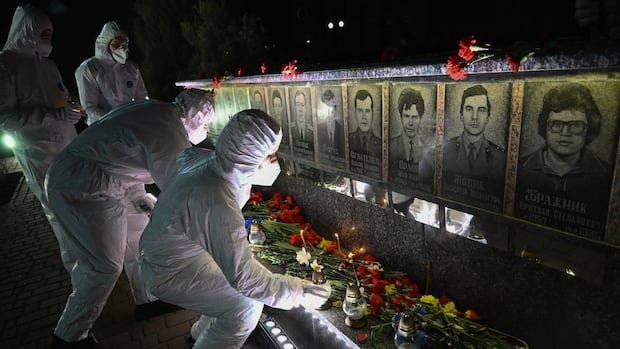

Ukraine marked the 40th anniversary of the Chornobyl disaster on Sunday, amidst concerns that the ongoing conflict with Russia could trigger a recurrence of the catastrophic nuclear incident that resulted in numerous casualties and severe environmental damage. The tragedy, which dispersed radioactive materials across Europe as the Soviet government attempted to conceal its magnitude, has gained heightened significance in light of Russia’s aggression towards its neighboring country.
Kyiv has alleged that Moscow has repeatedly directed missiles and drones near the Chornobyl plant as part of attacks on Ukrainian cities, leading to the impairment of a vital protective barrier during an assault last year. Additionally, Russian forces have seized control of Ukraine’s Zaporizhzhia nuclear power plant in the southeast, which has experienced numerous temporary blackouts since the Russian occupation began in March 2022.
Foreign dignitaries, including the EU energy commissioner, arrived in Kyiv to observe the anniversary and offer renewed assistance to Ukraine’s energy infrastructure, which has been a frequent target of Russian airstrikes. Ceremonies were solemnly held in Kyiv and at the Chornobyl plant itself, where President Volodymyr Zelenskyy, alongside Moldovan officials, lit a candle in remembrance.
The Chornobyl plant’s protective structure suffered damage from a Russian drone strike in February 2025, necessitating substantial repairs estimated at least 500 million euros to prevent lasting harm. The European Bank for Reconstruction and Development is coordinating fundraising efforts for the reconstruction project. The International Atomic Energy Agency’s director general emphasized the urgency of commencing the repairs during a speech in Kyiv.
Kyiv’s chief prosecutor reported that Ukrainian radar systems detected 92 Russian drones within close proximity to the plant’s shield since June 2024. Nuclear energy has become a cornerstone of Ukraine’s power supply, constituting approximately 70% of total electricity generation following Russia’s invasion. The control of the Zaporizhzhia facility, the largest in Europe, remains a contentious issue in peace talks brokered by the United States between Kyiv and Moscow.
The catastrophic explosion at reactor four of the Chornobyl plant on April 26, 1986, resulted in widespread radiation exposure, mass evacuations, and extensive land contamination. While numerous individuals have succumbed to radiation-related ailments like cancer, the exact death toll and long-term health implications remain subjects of debate.
Pope Leo acknowledged the enduring impact of the Chornobyl disaster on humanity’s consciousness and advocated for the responsible utilization of nuclear power to promote life and peace. Testimonies from cleanup workers, including Serhii Balashov, highlighted Soviet authorities’ efforts to conceal the aftermath of the accident, even from those directly involved in containment efforts.
Situated within a vast exclusion zone north of Kyiv, the Chornobyl plant now operates under tight security, with National Guards patrolling the premises. The once-bustling city of Prypiat, now deserted, is home to roaming moose and wild horses, illustrating nature’s reclamation in the absence of human activity.