
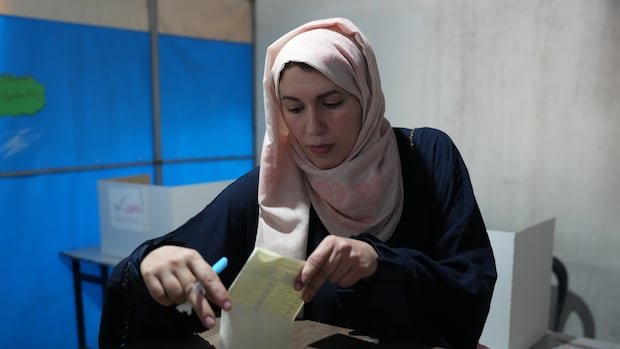

In the latest Palestinian municipal elections, supporters of President Mahmoud Abbas emerged victorious in most races, as confirmed by election authorities on Sunday. This election marked a significant development, with the inclusion of a Gaza city controlled by rival Hamas for the first time in nearly two decades.
The ballot, conducted on Saturday, was noteworthy as it was the first election held in Gaza since 2006 and the first Palestinian polls since the commencement of the Israel-Hamas conflict over two years ago, triggered by Hamas’s attack on southern Israel in October 2023.
The decision to include Deir al-Balah in Gaza, a city that endured lesser damage compared to other areas during the conflict, was emphasized by Abbas’s Palestinian Authority (PA) based in the West Bank, aiming to demonstrate Gaza’s integral role in a prospective Palestinian state.
Despite the low voter turnout during the elections, Palestinian Prime Minister Mohammad Mustafa described the event as taking place at a critical juncture amidst intricate challenges and special circumstances. Mustafa highlighted the elections as an initial stride in a broader national process intended to fortify democratic practices and strive for national unity.
Residents of Deir al-Balah expressed hopes that the elections would pave the way for positive transformations, viewing it as a crucial first step towards change within the municipality. The anticipation is that the election results will catalyze improvements in the living conditions and governance of the city.
While Hamas refrained from officially fielding candidates in Gaza and boycotted the West Bank race, Fatah’s dominance in the West Bank was widely anticipated. Another political party, the Palestinian National Initiative, also opted to boycott the elections, citing concerns about the lack of genuine democratic competition and the imposition of specific political agendas by the Palestinian Authority on candidates.
Despite Hamas’s absence from the formal ballot, certain candidates associated with the movement were identified on one of the Deir al-Balah lists, potentially indicating support for Hamas among residents. The preliminary results revealed varying success for the competing lists, with Abbas loyalists securing a significant majority in the West Bank.
The recent conflict’s aftermath in Gaza, characterized by widespread destruction and displacement, contributed to logistical challenges during the elections. Limited resources and materials, including essentials like election boxes and ink, were hindered by restrictions imposed by Israel. The election organizers in Deir al-Balah managed to overcome these obstacles with local solutions and support from UN agencies.
While the election results were downplayed by Hamas as having minimal impact on broader national issues, the outcomes signify a significant political shift within the region. The elections, despite their challenges, mark a crucial step towards democratic progress and potential changes in governance and policies at the local level.