
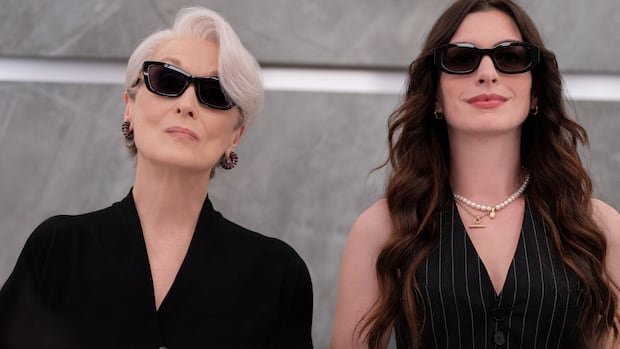

In the middle of the sequel to “The Devil Wears Prada,” Meryl Streep’s character, Miranda Priestly, finds herself in an unexpected situation where she is being lectured, a scenario that would have been unthinkable in the fashion franchise’s earlier installment two decades ago. The film, titled “The Devil Wears Prada 2,” portrays a struggling journalism landscape, a disinterest in traditional tastemakers, and hints at the potential downfall of the trendsetting magazine, Runway.
Priestly is confronted by tech billionaire Benji Barnes, who envisions a future where AI will replace the need for articles, models, and human input in Runway’s production. This stark outlook is compared to the destructive lava flows of Pompeii, symbolizing a looming threat to the fashion industry as Priestly navigates a changing landscape.
The storyline follows Anne Hathaway’s character, Andy Sachs, now an established journalist facing career setbacks and returning to Runway for a less glamorous job. The shift to digital platforms has impacted the magazine’s operations, affecting characters like Stanley Tucci’s Nigel, who reminisces about the magazine’s past glory.
Emily Blunt’s character, Emily Charlton, stands out in the narrative, managing to assert her influence at Dior while keeping Priestly in check. The plot thickens as Runway faces a reputation crisis, leading to the hiring of Andy for damage control, setting the stage for a reunion of familiar faces and nostalgic references.
Despite the familiar elements, the sequel struggles to match the original’s depth of character development and societal commentary. Streep’s portrayal of Miranda Priestly lacks the nuanced exploration of her personal struggles, focusing more on comedic elements and workplace dynamics. The film also veers away from exploring the fashion industry’s significance, opting for a lighter tone that may leave viewers yearning for a more substantial narrative.
While the sequel maintains its dramatic flair and visual appeal, it falls short in delivering a compelling storyline that resonates as powerfully as its predecessor. The plot feels disjointed at times, relying on familiar tropes without offering substantial growth or commentary on the evolving world of fashion. Despite its entertainment value, “The Devil Wears Prada 2” struggles to leave a lasting impact, resembling a glossy yet superficial production rather than a thought-provoking exploration of the industry.