
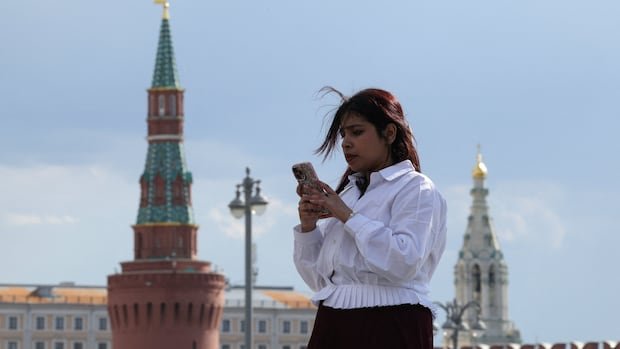

Residents in central Moscow experienced a temporary internet blackout on Tuesday morning, preventing them from accessing social media, online banking, or ride-hailing services. This outage marked the latest in a series of disruptions in the capital city. Footage circulated online showed people flocking to establishments like Vkusno i tochka and cafes to utilize the available Wi-Fi during the outage.
The government reinstated mobile internet services by mid-afternoon, citing security concerns as the reason for the interruption. Telecom companies and banks in Russia had forewarned the public about potential outages leading up to the upcoming Victory Day Parade on May 9, which is expected to be significantly scaled down this year. However, these disruptions seem to align with Moscow’s broader strategy to restrict internet access and promote state-sanctioned online platforms.
A 37-year-old teacher named Artem, residing in Moscow, expressed skepticism towards the government’s security justification for the internet outages. He highlighted a prevailing lack of trust among the public regarding official explanations for such disruptions. Amid Russia’s prolonged military involvement in Ukraine, the Kremlin has intensified efforts to control online narratives by restricting access to dissenting information.
The government has justified the mobile internet restrictions by claiming that mobile networks could aid in targeting drones. Concurrently, authorities have launched a crackdown on virtual private networks (VPNs) that enable users to bypass government-imposed digital restrictions. This move aims to foster a “sovereign internet” featuring domestically regulated platforms and services.
Industry insiders, including tech executive Natalya Kaspersky, have criticized the government’s actions, attributing them to widespread public discontent. Kaspersky emphasized a significant increase in internet breakdowns and questioned the authorities’ excessive focus on VPN traffic control. Observers have likened Russia’s digital censorship to an “information autocracy,” drawing parallels to China’s Great Firewall.
As the government intensifies its grip on the digital space, concerns over the erosion of online freedom and access to uncensored information continue to mount. Critics argue that Russia’s evolving censorship measures could potentially isolate citizens within a state-sanctioned narrative while prompting tech-savvy individuals to seek innovative ways to circumvent restrictions.