
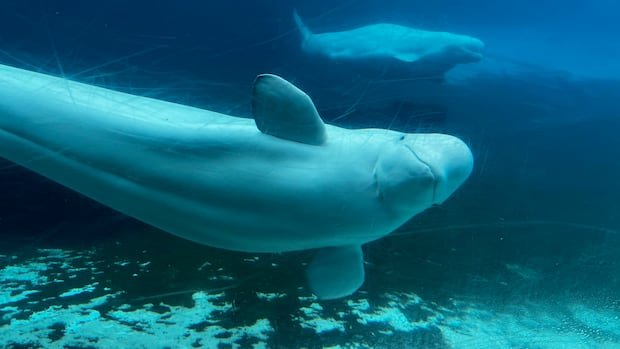

Animal Justice, a national animal law advocacy organization, has urged the Canadian government to impose a condition on the permits allowing most of the 30 beluga whales from Marineland in Niagara Falls, Ont., to be shipped to U.S. aquariums. The condition proposed is that the whales should not be bred. This challenge comes on the same day that the U.S. National Oceanic and Atmospheric Administration (NOAA) greenlit an emergency rescue plan for approximately 28 of the whales to be distributed among four U.S. aquariums, with two others slated for transport to an aquarium in Spain pending necessary permits.
Animal Justice emphasized the importance of ensuring that the transported whales are not subjected to entertaining shows akin to those previously held at Marineland. The organization stressed the need to prevent any breeding or entertainment activities involving the whales at their new homes. Canadian Fisheries Minister Joanne Thompson’s office indicated that each cetacean must undergo a health check by a Canadian veterinarian as a prerequisite for the export permits.
While Thompson’s office did not confirm whether measures would be implemented to prevent breeding or entertainment at the U.S. aquariums, Erik Nosaluk, deputy director of communications for the minister’s office, stated that final authorizations for the transfer of the whales would be granted once health assessments by accredited Canadian veterinarians are completed. The federal government’s policy prohibits breeding or impregnation of cetaceans being exported from Canada.
The four U.S. aquariums receiving the beluga whales are accredited by the Association of Zoos and Aquariums, which involves a thorough inspection process to ensure animal welfare and proper care standards. Johnny Ford, vice-president of communications for Shedd Aquarium in Chicago, emphasized the focus on safely executing the rescue operation for the whales, highlighting the unprecedented scale of the endeavor.
Camille Labchuk, a lawyer and executive director at Animal Justice, stressed the necessity of protecting the transported whales from breeding and performance activities, in line with Canadian regulations. Labchuk expressed the urgency of ending whale captivity, emphasizing the potential negative impact of breeding by U.S. aquariums on this objective. The U.S. aquariums assured that dedicated care staff would assess the whales’ well-being and provide appropriate care during transportation and upon arrival at their new facilities. Marineland acknowledged the necessity of relocating the whales for their long-term care and endorsed the rescue operation as being in the best interest of the animals.
The process of shipping the beluga whales to the U.S. aquariums is expected to take several weeks once all necessary approvals are obtained.