
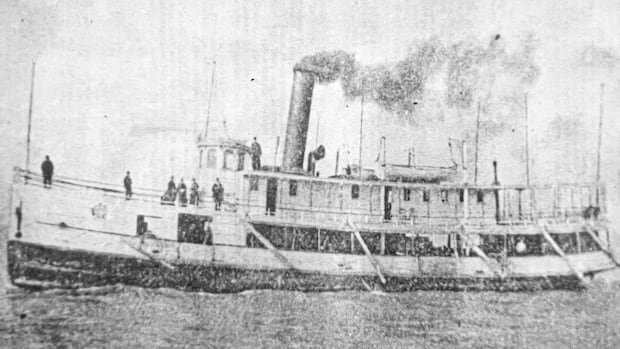

A team of enthusiasts passionate about marine archaeology will investigate a tragic shipwreck from over a century ago on a beach in southwestern Ontario this summer. The SS Erie Belle, a steam tug, exploded violently in 1883 on Lake Huron, just below Kincardine, claiming the lives of four crew members instantly and injuring two others who later succumbed to their injuries.
The cause of the wreck has been attributed to a faulty boiler, and now conservation and wildlife biologist David Galbraith is spearheading an underwater survey to uncover more details about the incident. Galbraith, a member of the Ontario Marine Heritage Committee, shared his personal connection to the wreck, mentioning that it has always intrigued him since childhood.
The team, authorized with a marine archaeology license from the province, will commence the survey without disturbing any artifacts. They plan to document the site through measurements, recordings, and photographs, in accordance with the Ontario Heritage Act regulations that prohibit unauthorized alteration or recovery of artifacts from recognized marine archaeological sites.
Galbraith, accompanied by fellow OMHC member Scarlett Janusus, will spend the summer at Boiler Beach, where the survey will take place. Janusus emphasized the significance of understanding the region’s history through marine heritage, noting the importance of such research in preserving accurate historical records.
Acknowledging the need for more marine archaeology initiatives in the province, Janusus expressed her support for Galbraith’s project. The survey is anticipated to extend into August, with Galbraith emphasizing the iterative nature of scientific inquiry, suggesting that this initial exploration is just the beginning of a broader learning process.