
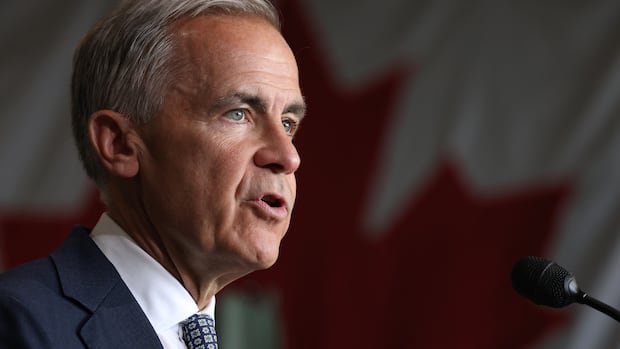

Prime Minister Mark Carney has confirmed engaging in discussions with U.S. President Donald Trump following the recent tariffs announcement. Both leaders have agreed to escalate trade talks in response to the latest trade tensions with the United States.
Carney stated that negotiations will be intensified promptly, without specifying the exact measures the government will take in response to the potential tariffs. He mentioned exploring all available options to address the situation during discussions with other provincial leaders.
President Trump expressed his affection for Canada and its people during a meeting in the Oval Office, highlighting the long-standing economic challenges faced by the United States. He emphasized the importance of the U.S. in Canada’s economic survival, citing a tough history between the two countries.
Conservative Leader Pierre Poilievre criticized the new tariffs as unjust and pledged cooperation with the federal government to prevent their implementation. Poilievre emphasized the need for collaborative efforts to safeguard Canadian interests in the face of escalating trade tensions.
In a proactive move, the Trump administration announced a 50% tariff on various Canadian exports within a month, attributing the decision to perceived retaliatory actions by Canada against U.S. trade policies. The White House detailed the reasons for each trade dispute in three presidential proclamations, focusing on sectors such as motor vehicles, dairy, and alcohol.
The alcohol-related trade issues stem from Canadian provinces imposing bans on U.S. alcoholic beverages, impacting exports significantly. The bans were a response to previous U.S. tariffs on various Canadian industries. Prime Minister Carney emphasized that any changes to these bans should be part of a comprehensive trade agreement rather than isolated actions.
The ongoing discussions between the U.S. and Canada aim to reach a broader trade agreement that addresses key sectors like steel, aluminum, lumber, and the auto industry. Carney highlighted the importance of global competitiveness and collaboration with Mexico to enhance the mutual benefits of the agreement.
Trade Minister Dominic LeBlanc chaired a meeting to analyze the potential impact of the tariffs on vital sectors and deliberate on Canada’s response. The government’s advisory committee on Canada–U.S. economic relations played a crucial role in providing insights and strategic direction on managing the trade relationship.
The dialogue between the two nations remains open, with efforts to find common ground and resolve trade disputes amicably. Carney’s proactive approach to trade negotiations underscores the importance of maintaining a robust economic relationship between Canada and the United States.