
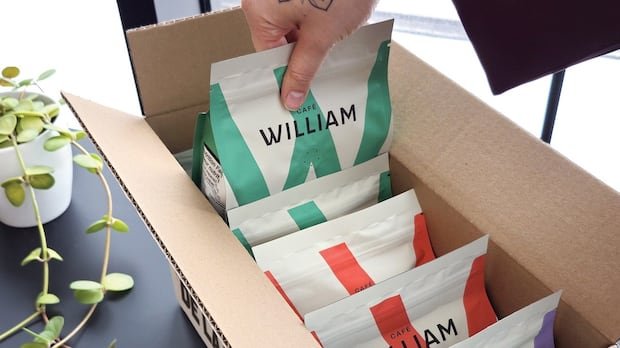

An artisanal coffee roaster in Eastern Townships is relocating its production operations back to Quebec following a significant decision by the U.S. Supreme Court to overturn contentious “reciprocal” tariffs.
Having served the province for close to four decades, Café William is currently in the process of repatriating its activities to Sherbrooke, Quebec. This shift represents a departure from the company’s previous strategy implemented last year to navigate the trade conflict.
Rémi Tremblay, the president and CEO, explained that with tariffs as high as 25 to 35 percent in the food industry, particularly challenging for manufacturers with slim profit margins like theirs, they needed to find a viable solution. The U.S. market previously accounted for 30 to 40 percent of the roaster’s business.
To circumvent the reciprocal tariffs imposed in April by the Trump administration, Café William entered into a cross-border partnership with a roaster in New Jersey. Under this arrangement, the American partner handled the roasting and packaging for Café William’s U.S. clients, while the Sherbrooke facility managed the same for the partner’s Canadian customers.
Following the recent ruling by the U.S. Supreme Court invalidating the duties, Café William is now preparing to bring its operations back home. The company reported that it maintained its workforce through work-sharing programs during the transition and is currently experiencing a higher business volume than pre-trade war levels, leading to plans to hire nearly 20 new employees.
Despite these positive developments for Café William, experts caution about ongoing uncertainty in the manufacturing sector. Rosemarie Bégin from PwC Canada noted that while more companies are considering cross-border manufacturing models due to the tariffs, financial assessments are crucial given the significant investments involved.
The legal uncertainties resulting from the U.S. Supreme Court’s decision are also seen as potential hurdles for future trade negotiations, including the Canada-U.S.-Mexico Agreement (CUSMA). Véronique Proulx, representing the Quebec federation of chambers of commerce, highlighted the current instability, prompting firms to delay major investments in Quebec as they weigh options amid the trade environment.
As businesses navigate these challenges, the federation calls for governmental support through tax reductions and streamlined regulations to bolster confidence and encourage growth. Despite these calls, Quebec’s labor minister declined to comment on Café William’s repatriation.
In parallel, U.S. trade representative Jamieson Greer emphasized the inevitability of tariffs in trade agreements, suggesting that Canada should accept tariffs as a component of any deal with the U.S. administration, including potential renegotiations of the CUSMA.
Overall, the shifting trade landscape underscores the complexities and considerations facing businesses like Café William as they adapt to evolving trade dynamics and seek sustainable growth opportunities.