
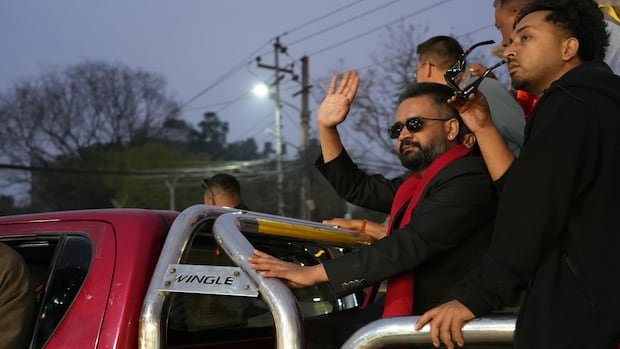

In a significant win that is set to transform Nepal’s political landscape, Balendra Shah, a former rapper turned politician, seems on track for a sweeping victory in the country’s first elections since protests led by youth activists ousted the previous government last autumn. Initial results from Nepal’s election commission on Sunday revealed that the 35-year-old ex-rapper, known as Balen, and his centrist Rastriya Swatantra Party (RSP) secured 122 out of 165 directly elected parliamentary seats.
The electorate across Nepal overwhelmingly supported Balen, signaling a strong desire for change and a rejection of the old establishment blamed for corruption and nepotism. Voters like 24-year-old Shubha Khadgi from Kathmandu expressed their desire for Balen to lead a new movement focused on youth empowerment, fresh ideas, and reforms.
The recently concluded election was the first since security forces clashed with demonstrators protesting a social media ban, resulting in 19 deaths and sparking widespread unrest. The Gen Z-led uprising, marked by anger against the ruling elite for economic decline and corruption, saw significant violence and destruction across Nepal.
Celebrations erupted as Balen decisively defeated his opponent, former prime minister KP Sharma Oli, in the polls. Despite the unofficial victory, final results are pending as Nepal also allocates parliamentary seats proportionally to parties, which takes more time to tally.
The win was met with satisfaction by many, with observers noting the RSP’s rapid rise in popularity despite being relatively unknown until recently. Political expert Bipin Adhikari highlighted the party’s lack of political baggage as a significant factor in its success.
For individuals like Madan Karki, a protester injured during the uprising, the election results bring hope for real change in Nepal’s political landscape. The shift in power signifies a departure from traditional practices of buying votes and hints at potential major reforms in the country.
Despite the optimism, challenges lie ahead for Balen and his party in implementing substantial changes, especially considering the need for support from the National Assembly and the uncharted territory of his foreign policy stance. However, supporters like Khadgi believe that actions should speak louder than words, emphasizing the importance of delivering on promises.
The election saw a lower voter turnout compared to previous years, with logistical challenges hindering participation for many Nepalis. Concerns over corruption and governance prompted voters to place their trust in Balen and the RSP, hoping for a brighter future under new leadership.
As Nepal looks towards stability and progress, citizens like Basant Bajracharya acknowledge the weight of responsibility on Balen’s shoulders and express confidence in his ability to lead the country forward. The election outcome reflects a collective desire for change and a new era in Nepali politics under Balen’s leadership.