
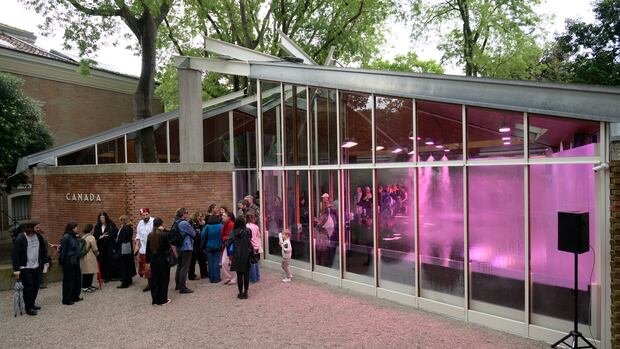

At the 2026 Venice Biennale, the Canadian pavilion stands out as a unique representation of a living climate system rather than a traditional national exhibition. The interior environment has been meticulously adjusted to simulate the humid heat of the Amazon, complete with warm mist emanating from small tubes and a portion of the pavilion transformed into an elevated pond featuring floating lily pads in murky water.
Named Entre chien et loup, the installation by Montreal artist Abbas Akhavan reimagines the Canadian pavilion as a grand Wardian case reminiscent of the 19th-century glass containers used for plant transportation globally. Central to the display are Victoria water lilies, originating from the Royal Botanic Gardens in London and nurtured at the Orto Botanico di Padova in Italy before being brought to maturity in the pavilion.
Akhavan views the Victoria water lily as a symbol of intertwined histories, encompassing the era of imperial exploration, classification, and exhibition of exotic flora. The plant’s ancient lineage, around 100 million years old, predates modern empires, highlighting the transient nature of power. Amidst global conflicts, migration challenges, and environmental concerns, the Canadian pavilion prompts contemplation on access to and preservation of nature.
The Venice Biennale, renowned as a premier art event, showcases artists from various nations in permanent and temporary pavilions scattered across the Giardini and Arsenale sites. While artworks are not sold at the Biennale, making a significant impact in Venice can significantly boost an artist’s international reputation.
Akhavan’s installation emphasizes the age-old nature of the lilies, with the flowers expected to bloom and evolve throughout the Biennale, culminating in a dynamic living exhibit. The Bolivian water lily, scientifically known as Victoria boliviana, thrives in regions vulnerable to climate change and has a captivating life cycle, symbolizing movement and possession across continents.
The work delves into the complexities of botanical exploration, renaming, and exhibition, shedding light on how science, empire, and conservation intersect to regulate and define the natural world. Through the lens of the water lily’s journey from South America to Venice, the installation challenges prevailing notions of nature conservation and access.
Commissioned by the National Gallery of Canada and curated by Kim Nguyen, Akhavan’s installation at the Biennale sparks discussions on environmental themes often overshadowed by geopolitical discourse. The subdued yet thought-provoking display raises questions about wealth, power dynamics, and the representation of nature in the elite sphere.
In a venue teeming with artistic expressions, the ability of an artist to captivate viewers within seconds is crucial for success. Akhavan’s mastery in transforming architectural elements into compelling narratives ensures his work can withstand rapid scrutiny. While Entre chien et loup demands a nuanced appreciation that may test visitors’ patience, its understated impact resonates amidst the vibrant art scene of the Biennale.