
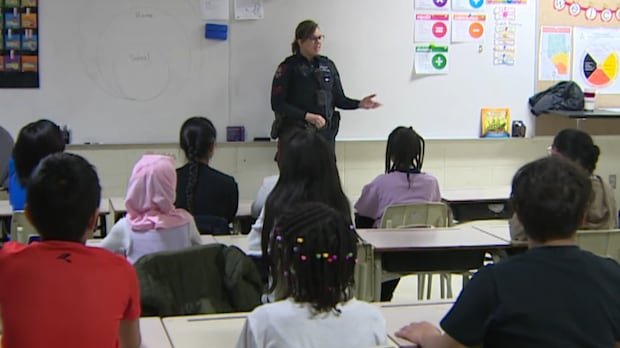

Upon the return of police officers to Greater Victoria School District 61 this autumn, high school principal Heather Brown expressed her support for their presence. Two years ago, the School Police Liaison Officer (SPLO) program was discontinued by the school board, leaving Brown feeling a loss of a valuable connection, despite having emergency access to police. Previously, SPLOs collaborated with Brown to advise and assist students involved in gang activities, a prevalent concern in her area. Brown highlighted successful interventions in pulling teens out of such situations with the support of SPLOs, families, and the community. However, the absence of SPLOs meant engaging with law enforcement personnel who lacked the same relationships with Brown and the youth.
In recent years, Canadian schools in various communities had phased out programs that stationed police officers on school premises. This action was often in response to reports citing student discomfort and intimidation caused by such programs. Additionally, budget constraints or resource limitations led to the discontinuation of programs in some regions.
Amid reports of escalating violence in schools, there is a resurgence or reconsideration of these programs, with mixed reactions from different quarters. The primary objective of these programs is to foster relationships and trust between police officers and students through various activities like sports events, safety presentations, or informal interactions in school settings.
Critics, like Calgary parent Michelle Robinson, question the depth of these connections, especially noting the limited presence of officers across multiple schools. Robinson shared concerns about the fear, mistrust, and surveillance felt by certain student groups, including Indigenous students, in the presence of officers. She emphasized the need for alternative approaches to addressing the root causes of violence, such as investing in education, mental health support, and community resources.
Researcher Temitope Oriola highlighted that public perception of School Resource Officer (SRO) programs varies, with BIPOC students and caregivers often reporting negative impacts. While some individuals praise the positive interactions with SROs, Oriola emphasized the lack of concrete data linking these programs to enhanced school safety. He underscored the need for more transparency, oversight, and community input in these programs.
Lisa Gunderson, a parent in Victoria, emphasized the importance of police officers building relationships and bridging gaps in communities, particularly in schools with histories of conflict. She advocated for continuous collaboration, feedback mechanisms, and enhanced training for officers to address issues of racialized violence and diverse identities effectively.
In Toronto, student Aaria Haji shared positive experiences of police officers engaging with students in her middle school, impacting student behavior positively. She highlighted instances where officer visits led to improved student conduct and accountability for vandalism incidents. Haji expressed a desire for more diverse community workers to interact with students, aiming to provide better representation and understanding among youth.
Continuous dialogue and community engagement remain crucial to navigate the complexities of police presence in educational settings, ensuring a balance between safety, trust-building, and addressing systemic issues.