
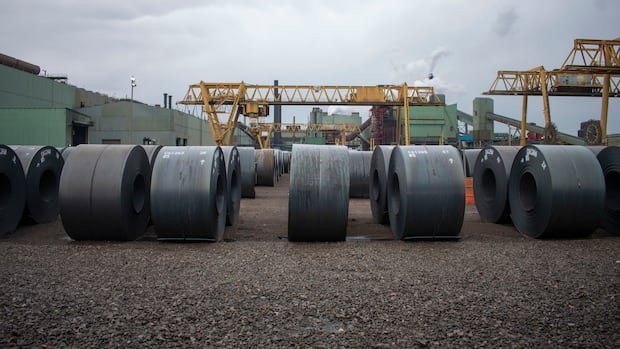

At a fiery community gathering held on Tuesday, a spokesperson from ArcelorMittal Dofasco, a steel manufacturer in Hamilton, stated that despite the looming 2030 deadline for its decarbonization plan, no definitive decisions have been made yet. Gas Gebara, the company’s general manager overseeing environmental and energy matters, admitted that timelines have been altered but declined to provide any specifics on when the plan will be executed, or if it will occur within the next twenty-five years. Gebara emphasized during the virtual quarterly public meeting that sharing a project completion date of 2050 would be irresponsible and misleading.
The communication strategy of the steel industry leader has undergone significant changes since 2022, when the then-Prime Minister Justin Trudeau visited the plant for a groundbreaking ceremony related to the decarbonization initiative. Backed by close to half a billion dollars in funding from federal and provincial authorities, Dofasco had previously committed to transitioning from coal to cleaner energy sources, aiming to reduce emissions by 60% by 2028, making it the largest emitter of greenhouse gases in Ontario.
In 2024, an investigation conducted by CBC Hamilton revealed that crucial milestones had been missed, such as the demolition of an old coke plant to make way for a new direct reduced iron plant powered by natural gas or the establishment of a gas pipeline for supply. The federal government then extended the emission reduction deadline to 2030, which was two years longer than initially announced, attributing the delay partially to President Donald Trump’s imposition of tariffs on the Canadian steel sector. Gebara cited this as the reason for proceeding cautiously with all expenditures.
Recently, CBC Hamilton reported on a project amendment posted on a federal government website, indicating that the timeline had been extended to 2050 and an additional $50 million in funding would be provided by Ottawa, raising the total project cost to nearly $2 billion. Rather than producing direct reduced iron locally in Hamilton, ArcelorMittal plans to import it from its facility in Quebec. Despite the amendment being posted in March, Dofasco did not publicly disclose the changes until the Tuesday meeting, prompting criticism from Environment Hamilton’s Ian Borsuk, a member of the Community Liaison Committee, who accused the company of inadequate communication with the community.
During the meeting, attended by around 60 individuals including residents, researchers, and representatives from the Environment Ministry, Dofasco revealed plans to upgrade at least one coke plant to extend its operational lifespan and reduce emissions. Michael Brown, a senior environmental specialist at Dofasco, mentioned that a comprehensive oven repair program would be undertaken over the next year to achieve these objectives.
Lynda Lukasik, the city’s climate change initiatives director, raised concerns about the lack of updates on ArcelorMittal’s website regarding the project changes, urging the company to enhance transparency for the public. She challenged Gebara’s assertion that providing a timeline to the public could be irresponsible, emphasizing that with public funds allocated by provincial and federal governments for the project, transparency is paramount.
Jochen Bezner, another member of the Community Liaison Committee, questioned Dofasco’s shift in messaging and decision-making process, referencing the earlier announcements made during Trudeau’s visit in 2022. Gebara acknowledged the changes since then, describing the steel industry’s current situation as unprecedented. However, critics pointed out that Dofasco had already missed milestones even before the imposition of tariffs.
In conclusion, the steel industry faces challenges in meeting decarbonization goals within the set timelines, prompting calls for increased transparency and accountability from stakeholders involved in the project.