
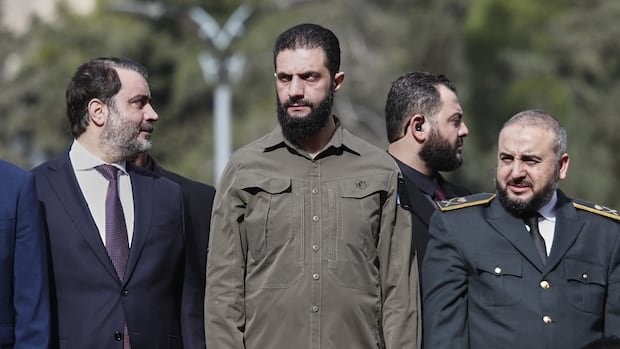

Syrian government forces have seized control of a military base in eastern Syria, previously operated by U.S. troops in the fight against the Islamic State group, as announced by the defense ministry on Thursday. This development follows revelations that the country’s acting president, Ahmad al-Sharaa, along with several Syrian ministers, narrowly escaped five assassination attempts last year, according to a United Nations report released on Wednesday.
Located strategically near the Jordan and Iraq borders, the al-Tanf base was handed over in collaboration with the U.S. military, with Syrian forces now responsible for securing the base and its surroundings. Two U.S. officials, speaking anonymously, confirmed the transfer to Reuters.
The Syrian Defence Ministry disclosed that Syrian troops have been deployed in the desert region around the al-Tanf garrison, with plans for border guards to be stationed in the area soon. This deployment follows an agreement reached last month between the Syrian government and the Syrian Democratic Forces (SDF), a U.S.-backed Kurdish-led group, to integrate into the national military.
The al-Tanf garrison had faced numerous drone attacks by Iran-backed factions in recent years, but such assaults significantly dwindled after the collapse of Bashar al-Assad’s regime in December 2024, when rebel forces entered Damascus, prompting Assad to flee to Russia.
Playing a crucial role in combating the Islamic State group, which declared a caliphate across Syria and Iraq in 2014, al-Tanf base was instrumental in the group’s defeat in 2017 in Iraq and two years later in Syria. In recent weeks, the U.S. military initiated the transfer of thousands of ISIS detainees from SDF-run prisons in northeastern Syria to Iraq for legal proceedings.
President Ahmad al-Sharaa has been consolidating control over Syria, with government forces seizing large swathes of northeastern Syria following clashes with the SDF. A ceasefire was subsequently established between the government and the SDF.
The UN report detailed five thwarted assassination plots against al-Sharaa and other top officials, orchestrated by a group linked to the Islamic State group. The report, compiled by the UN Office of Counter-Terrorism and issued by Secretary General António Guterres, did not specify the exact timing or specifics of the attempts on the officials’ lives.
Highlighting the ongoing threat posed by ISIS, the report emphasized the group’s persistent efforts to undermine Syria’s new government and exploit security vulnerabilities. UN counterterrorism experts estimate that around 3,000 ISIS fighters are active in Iraq and Syria, with the majority operating in Syria, particularly targeting security forces in the northern and northeastern regions.
In November, President al-Sharaa’s government joined the international coalition combating the Islamic State group, previously a dominant force in Syrian territories. Al-Sharaa, a former leader of Hayar Tahrir al-Sham, a militant group once affiliated with al-Qaeda, has since severed those ties.
The developments underscore the complex security landscape in Syria and the ongoing challenges posed by extremist groups despite significant military victories against them.