
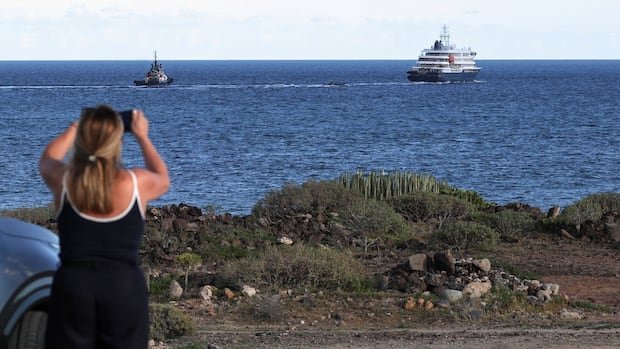

After a luxury cruise ship experienced a hantavirus outbreak, most passengers have returned to their home countries. The MV Hondius, the ship where the rare hantavirus outbreak occurred, docked at Spain’s Canary Islands for passengers to disembark and be repatriated. Among the passengers are four Canadian citizens currently self-isolating in British Columbia, while two others from Ontario who disembarked earlier are also self-isolating. Additionally, six other Canadians from different provinces who had possible contact with hantavirus cases are self-isolating, with none showing symptoms or being tested as of Monday.
The most common hantavirus strain in Canada is called Sin Nombre, as stated by Dr. David Safronetz, the chief of special pathogens at Canada’s National Microbiology Laboratory. The Andes strain, which has not circulated in Canada, is not expected to do so due to the lack of rodent reservoirs. The Sin Nombre strain causes a severe respiratory illness but does not spread between people.
Rodents such as the deer mouse, white-footed mouse, and red-backed vole are known to carry hantavirus in Canada, primarily in rural areas. It is important to properly clean and disinfect areas contaminated by rodent droppings to prevent hantavirus transmission. Human-to-human spread of hantavirus, particularly the Andes strain, occurs through close and prolonged contact, such as speaking, coughing, or sharing oral secretions.
Positive, asymptomatic cases of hantavirus may have a low risk of spreading the virus, but transmission can happen before symptoms appear. Testing for hantavirus can be done through PCR or serology tests, with positive results indicating either a current infection or a past immune response. Pets that are rodents may pose a risk of hantavirus transmission, while cats and dogs are less likely to transmit the virus. Proper precautions should be taken when handling rodents to reduce the risk of infection.
The decision to repatriate passengers from the cruise ship was influenced by the lack of medical resources onboard, as evacuating ill individuals for appropriate care would be challenging. Isolation periods for suspected cases of hantavirus are determined based on exposure timing, with symptoms typically appearing within a 30-day window. Testing for hantavirus in Canada is not conducted on asymptomatic individuals, while some countries opt for case-by-case testing.