
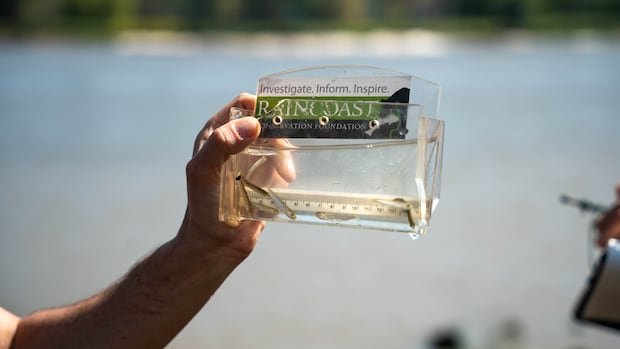

Wayne Baker, known as “the Gaspereau Man” in his hometown of Fredericton Junction, has been counting gaspereau along the Oromocto River for over 70 years. The gaspereau population has dwindled over time, but Baker believes a significant change along the St. John River is impacting these essential fish species.
Gaspereau, a term encompassing alewives and blueback herring, are considered a “keystone species” by Baker and the Oromocto Watershed Association. They play a crucial role in transporting nutrients inland from the ocean, sustaining local plant and wildlife populations. During their migration to spawn, gaspereau are preyed upon by various species like eagles, otters, and bears.
Commercially caught gaspereau are often used as lobster bait due to their abundance of small bones, making them less popular for recreational fishing compared to other species like trout or bass. However, Baker enjoys preparing gaspereau by brining, coating them in maple syrup, and smoking them in his smoke shack for a delectable snack.
Baker meticulously tracks the number of gaspereau migrating upriver to provide insights to the watershed group on the species’ status. The federal Fisheries Department previously limited the transportation of gaspereau above the Mactaquac Dam to a million fish annually, primarily through a trap-and-truck system. Surplus fish were auctioned to the highest bidder, but this practice was discontinued in 2020 in favor of transporting more gaspereau over the dam.
The increased transportation efforts have shown positive results, with millions of gaspereau successfully passing the dam to spawn in recent years. Despite the progress, Baker advocates for the construction of a fish ladder at the dam for a more sustainable approach.
Mathieu Cormier, a gaspereau fisherman for 26 years, supports removing the cap on fish transportation over the dam but highlights the need to safeguard downstream populations. He emphasizes the importance of a fish ladder to prevent casualties from the dam’s turbines during the fish’s return journey to the ocean.
Cormier’s fishing operations in the Oromocto River yield hundreds of thousands of gaspereau each season, with a significant portion utilized as lobster bait. The remainder is processed and exported, with a portion sent to Haiti as food supplies.
While Cormier and Baker may differ on certain fishing practices, they share a common goal of ensuring the species’ well-being. Patty Savoy, collaborating with the Oromocto First Nation to supply gaspereau for research, lauds the efforts to increase fish passage over the dam as a positive development with significant implications for the species’ conservation.
Gaspereau holds cultural and ecological significance for First Nations communities, supporting various traditional and ceremonial practices. Savoy emphasizes the importance of preserving gaspereau for future generations, underscoring the irreplaceable value of the species once it is lost.