
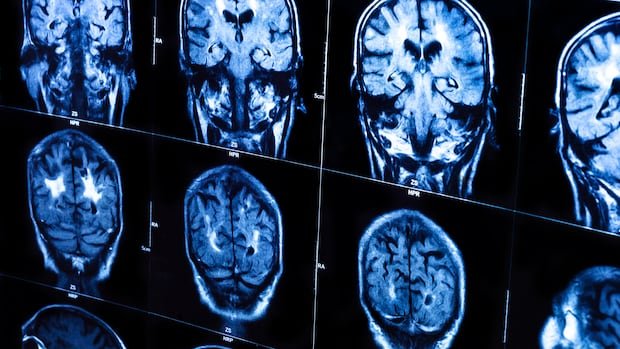

Dave Evans, a 65-year-old resident of Owen Sound, Ontario, underwent surgery to remove a pituitary gland tumor in October, performed by neurosurgeon Dr. Neil Duggal at London Health Sciences Centre (LHSC). The intricate procedure aimed to address Evans’s symptoms of extreme fatigue, headaches, and vision loss caused by the growth near the base of his brain. The surgery was challenging due to the gland’s proximity to vital arteries and nerves crucial for vision and brain function.
Traditionally, surgical teams rely on post-operative MRI scans to assess the extent of tumor removal. However, during Evans’s procedure, the LHSC team utilized a new mobile MRI system, allowing real-time monitoring of the surgery. With the aid of the mobile scanner, Dr. Duggal successfully removed nearly 99% of the benign tumor, enhancing the surgical outcome significantly.
Mobile MRI and CT scanners have gained popularity in Canadian healthcare facilities, providing flexibility in conducting various medical procedures, including tumor removals and stroke diagnoses. Dr. Duggal hailed the mobile MRI as a transformative tool, emphasizing its potential to improve surgical precision and reduce the need for follow-up interventions.
The adoption of mobile imaging technology in Canada has surged due to technological advancements and cost-effectiveness. These portable scanners offer comparable diagnostic capabilities to traditional machines at a lower initial investment. Experts suggest that the affordability and versatility of mobile scanners enable wider accessibility, especially for underserved regions and facilities with budget constraints.
In Edmonton, Alberta, the only mobile stroke unit in Canada operates seven days a week, utilizing a CT scanner onboard an ambulance to diagnose strokes promptly. This innovative approach streamlines patient care by delivering critical imaging services directly to patients, facilitating rapid treatment interventions for improved outcomes.
Despite the promising benefits of mobile scanners, researchers emphasize the need for ongoing enhancements in technology and clinical expertise to maximize their impact. Challenges such as internet connectivity in rural areas and image quality limitations require continuous refinement. However, the potential of mobile imaging devices to enhance healthcare accessibility and patient outcomes remains a driving force in advancing medical technology.
The successful utilization of mobile MRI in Evans’s surgery exemplifies the promising future of this emerging technology in revolutionizing patient care. With continuous advancements and research, mobile scanners have the potential to revolutionize medical imaging practices and improve health outcomes for individuals like Dave Evans, who have benefited significantly from these innovative interventions.