
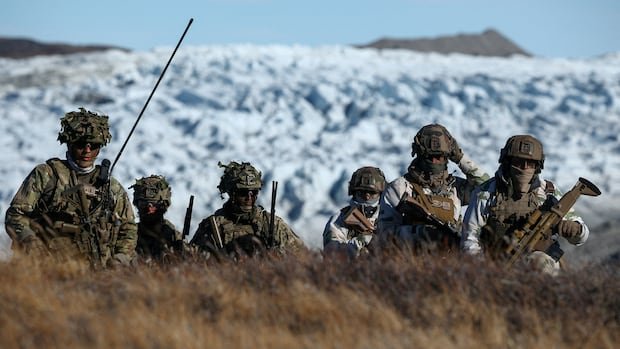

NATO Secretary General Mark Rutte took a cautious stance in addressing U.S. President Donald Trump’s recent comments regarding the potential deployment of European troops in Greenland. Reports surfaced over the weekend suggesting that several countries, including the U.K. and Germany, are exploring the idea of establishing a military presence on the Arctic island as a precaution against American expansionism.
Trump’s statements about taking action in Greenland “whether they like it or not,” along with his military threats against the semi-autonomous Danish territory, have raised concerns about issues that have been overlooked by both NATO and the United States for a long time.
Rutte hinted at ongoing discussions among European nations regarding enhanced Arctic security measures. However, he downplayed the significance of these talks, framing them as a continuation of previous discussions initiated by seven allied Arctic nations, including the United States, in the middle of last year.
“We must collaborate to ensure the safety of the Arctic region. Currently, we are deliberating on the next steps to guarantee practical follow-ups on these discussions and to collectively safeguard the Arctic,” Rutte stated.
Efforts seem to be directed at persuading Trump that NATO shares his interest in bolstering the defenses of Greenland. This shift in focus towards the Arctic is notable as it has been a neglected area for both the United States and NATO for decades. While Canada has increased its policy attention and committed additional resources to the Far North, the broader Western military alliance has been caught off guard by heightened security concerns emanating from the U.S.
Notably, NATO lacks an official Arctic policy or a dedicated command for the region, according to a recent report by the Arctic Institute Center for Circumpolar Security Studies. The alliance’s hesitance to prioritize the Far North has been evident, with past dismissals of the idea of creating a specialized body to oversee Arctic endeavors.
Recent developments have seen Greenland transition from the U.S. European Command to the U.S. Northern Command, signaling Washington’s view of the island as an integral part of its homeland defense network. The potential implications of Greenland’s pursuit of independence from Denmark on Arctic defense dynamics have been a subject of concern among U.S. defense analysts.
In conclusion, the evolving dynamics in Greenland underscore the complex interplay of geopolitical interests, security considerations, and strategic partnerships in the Arctic region. The quest for Arctic security and stability remains a key priority for NATO and its member nations as they navigate the evolving security landscape in the Far North.
[End of Rewritten Article]