
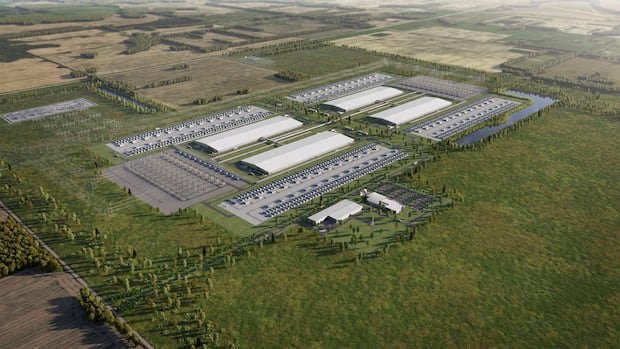

New York took a significant step this week by becoming the first state in the U.S. to halt the construction of hyperscale data centers. This decision, driven by concerns over energy consumption and environmental impact, was initiated through an executive order by Democratic Governor Kathy Hochul. The moratorium will prevent the issuance of new permits for large data centers for a period of one year.
This move places New York at the center of a broader discussion on how to regulate the expansive data centers that support artificial intelligence. This debate has also extended to Canada, where companies are seeking to expand their data center operations, prompting local communities to question the strain these facilities place on power grids and water resources.
While Hamilton, Ontario, was considering a similar pause, the city council ultimately voted against implementing a moratorium earlier this week. Anne Pasek, an associate professor at Trent University specializing in data centers, expressed concerns that many of these projects are approved without sufficient public consultation.
Data centers serve as the backbone for storing computing infrastructure, including servers and storage drives. Hyper-scale data centers, characterized by their large scale and capacity (often exceeding 5,000 servers and 10,000 square feet of floor space), have drawn particular scrutiny. These facilities not only support AI applications but also underpin cloud computing services that people commonly interact with, such as social media platforms and streaming services.
The exponential growth of AI technologies has led to a surge in demand for computing power, with companies investing billions of dollars in infrastructure to capitalize on this trend. However, this rapid expansion has raised concerns about the environmental footprint of data centers and their energy consumption.
Data centers are known for their substantial energy and water usage. The cooling systems in these facilities, essential for maintaining server operations, often rely on significant amounts of water. While some cooling methods claim to be more water-efficient, the overall water consumption by data centers continues to be a point of contention.
Despite the environmental challenges posed by data centers, their impact on power grids and local communities cannot be overlooked. The clustering of data centers in certain areas can lead to noise pollution, air pollution, and increased strain on infrastructure. As the AI industry expands further, the demand for resources will continue to grow, necessitating careful consideration of the long-term sustainability of data center operations.
In Canada, the rise of hyperscale data centers has prompted discussions about potential moratoriums similar to New York’s initiative. While some provinces have expressed openness to data center investments, others have raised concerns about the strain on resources and the need for sustainable development practices.
Overall, the debate surrounding data centers highlights the complex interplay between technological advancement, environmental impact, and community well-being. As the digital economy continues to evolve, striking a balance between innovation and sustainability will be crucial for the future of data center development.