
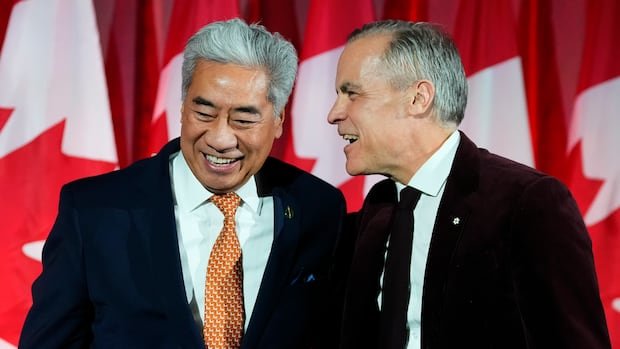

A few days after Michael Ma switched to the Liberal Party, Pierre Poilievre faced questions about the impact of losing another MP on his leadership of the Conservative Party.
Contrary to concerns about his leadership, Poilievre shifted focus to Mark Carney, accusing the prime minister of attempting to secure a majority in the House of Commons through underhanded tactics rather than seeking a mandate from the Canadian people.
Responding to Poilievre’s remarks, Carney emphasized his confidence in commanding the House of Commons’ trust, regardless of how a majority is achieved.
The contrasting viewpoints highlight the complexities of Canadian parliamentary democracy, sparking debates about the legitimacy of gaining a parliamentary majority through various means.
While Poilievre highlighted the importance of securing public support through elections, Carney’s emphasis was on maintaining the confidence of the House to govern effectively.
The historical context of floor-crossing in Canadian politics was also explored, with instances of MPs switching parties and the debates surrounding their actions.
Questions were raised about the ethical implications and democratic principles related to MPs changing allegiances, with considerations on the balance of power between party leaders and individual representatives.
The evolving political landscape in Canada prompted reflections on the potential outcomes of recent floor-crossings and the implications for governance and accountability.
The debate surrounding MPs’ freedom to make independent decisions and the role of party loyalty in shaping political dynamics were central themes in the discussions between Poilievre and Carney.
As the political scenario continues to unfold, the actions and decisions of MPs and party leaders are under scrutiny, with a focus on transparency and accountability to the electorate.