
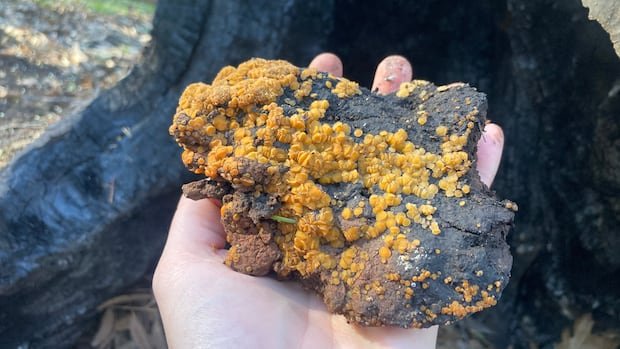

After a wildfire, the charred landscape may seem desolate, but it is actually a sign of renewal as fire-loving fungi begin to colonize the burned areas. These fungi, known as pyronema, are nature’s first responders to wildfires, releasing spores that resemble smoke. Researchers like Joey Tanney from the Canadian Forest Service and Monika Fischer from the University of British Columbia study the role of these fungi in post-fire environments.
With the increase in wildfires due to climate change, understanding how these fungi aid in recovery becomes crucial. The fungi survive by staying dormant until triggered by the heat of a wildfire. They play a vital role in consuming ash, carbon, and other harmful byproducts of fires, converting them into spores and fruiting bodies that serve as food for insects, mites, and bacteria, kickstarting the ecosystem’s recovery process.
Fungi also help prevent erosion and stabilize the soil by forming hyphae, threadlike structures that bind soil particles together. Researchers like Thea Whitman at UBC study how fungi and plant communities rebound after fires, showing a close connection between their recovery processes over time.
Moreover, fire-loving fungi could have industrial applications due to their ability to break down harmful pollutants. While the manipulation of these fungi for forest recovery is still untested, prescribed burns may enhance their response to future wildfires. This research opens up possibilities for utilizing fungi as a tool for ecosystem recovery in the face of increasing fire risks.