
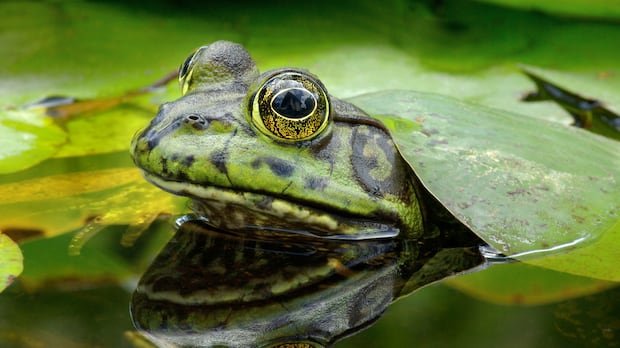

Residents in the Comox Valley on central Vancouver Island are joining forces to eliminate invasive American bullfrogs from local lakes and water bodies. The Tsolum River Restoration Society is launching workshops to help individuals set up tadpole traps, citing the threat these large bullfrogs pose to native species.
American bullfrogs, known to be twice the size of other frogs in B.C., have a diverse diet that includes frogs, salamanders, insects, small rodents, and snakes, as reported by the Invasive Species Council of B.C. One resident regularly checks the traps at Maple Lake to protect the delicate ecosystems in the area.
Bruce Moffat, a volunteer with the society, initially adopted a “live and let live” approach towards bullfrogs but changed his perspective upon discovering an abundance of invasive tadpoles in the lake. Moffat emphasized the urgent need to address the issue to prevent the decimation of local wildlife by the bullfrogs.
Moffat highlighted the devastating impact a thriving population of American bullfrogs could have on amphibians, fish, and insects in the area, ultimately affecting birds and larger species. The Invasive Species Council of B.C. pointed out the threat these bullfrogs pose to species at risk, such as the northern red-legged frog and the western painted turtle.
Gail Wallin, the executive director of ISCBC, stressed the importance of controlling bullfrog populations and documenting their activity, as eradicating them entirely may not be feasible. She suggested safe methods for trapping and euthanizing American bullfrogs to manage their numbers effectively.
Wallin commended the short-term impact of the tadpole traps set up by Comox Valley residents but emphasized the ongoing need for community efforts to regulate bullfrog populations. The Tsolum River Restoration Society is organizing workshops to educate residents on building and using tadpole traps to combat the invasive species.
Katie Gair, the project co-ordinator at the society, highlighted the cost-effective and accessible nature of the traps, aiming to empower community members to actively participate in conservation efforts. Gair emphasized the importance of identifying the distinctive features of bullfrog tadpoles to differentiate them from native species.
Removing American bullfrogs is a crucial component of the comprehensive strategy implemented to safeguard local species, as outlined by the Tsolum River Restoration Society. The organization has created resources, including a chart, to aid residents in identifying bullfrog tadpoles and contributing to conservation initiatives.