
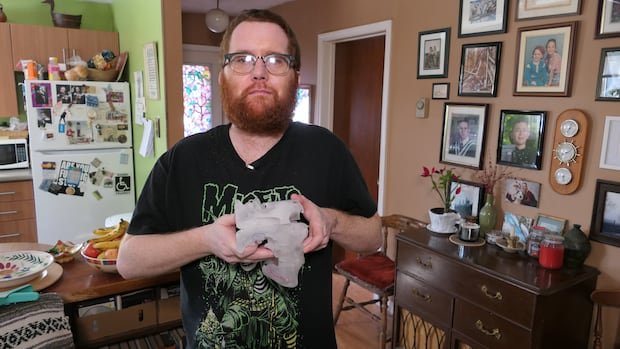

A resident of Winnipeg, who endured years of waiting for a surgery unavailable in Manitoba, has made significant progress and regained the ability to consume solid foods following a recent jaw operation in Saskatchewan. Daniel McClelland shared his journey, beginning when he sought treatment for a bone growth impairing his right jaw joint five years ago. Post-surgery, McClelland noted improved jaw alignment and reduced pain, mentioning that he is gradually reducing his reliance on pain medication.
Initially, Winnipeg medical professionals used a rib segment to replace McClelland’s malfunctioning jaw joint, which had fused to his upper jaw and skull. However, this replacement also fused to his skull, leading to two anchor points restricting his mouth’s full opening. Enduring persistent pain and the inability to eat solid foods, McClelland described surviving on liquid nutrition and facing limitations in daily activities.
After being referred to an oral surgery specialist in Ontario in June 2021, it was not until Dr. Christopher Ward, a maxillofacial and oral surgeon in Saskatchewan, intervened following a 2024 CBC feature that McClelland received the crucial treatment. The patient underwent a series of surgeries, with the final one occurring in December. Despite setbacks due to a severe bone infection necessitating multiple visits, McClelland anticipates complete recovery in about three weeks.
Dr. Ward highlighted the complexity of McClelland’s case, emphasizing the challenges posed by irregular bone fusion and the intricacies of revisiting a previously operated area. He underscored the scarcity of specialists capable of performing such procedures in Canada, with a significant portion of his patients hailing from Manitoba. The surgeon emphasized the need for advanced training opportunities in this specialty, expressing his desire to contribute to education in Manitoba despite encountering obstacles.
Regarding the healthcare system’s resources, Ward lamented the limited avenues for specialized training and procedural constraints, impeding surgeons from delivering optimal care. McClelland’s experience underscored communication lapses within the system, as he was misinformed about the availability of qualified surgeons. Expressing frustration over the delayed treatment, McClelland called attention to the inefficiencies that prolonged his suffering unnecessarily.
A spokesperson from Manitoba Health disclosed that local surgeons are now equipped to perform temporomandibular joint replacements as of January. Although a few patients are concluding their treatments outside the province, no pending referrals or waitlists exist for the procedure through Manitoba’s out-of-province program. The spokesperson shared that eight patients underwent treatments outside Manitoba in the past three fiscal years.
McClelland’s ordeal sheds light on systemic challenges and the critical need for improved communication and access to specialized care. The journey of recovery post-surgery serves as a testament to resilience and the impact of timely intervention in restoring quality of life.