
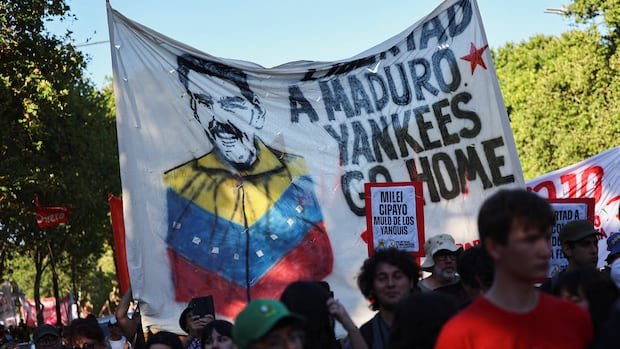

After removing Venezuelan President Nicolás Maduro over the weekend, U.S. President Donald Trump expressed his belief that American oil companies would enter Venezuela, invest billions, and generate substantial profits for both themselves and the Venezuelan population. He emphasized the intention to “take back the oil, frankly, we should’ve taken back a long time ago.”
Venezuela holds the largest proven oil reserves globally, but the authority to extract and benefit from these resources remains contentious due to historical events and associated complications. The country nationalized its oil sector many years ago, leading to the expropriation of major U.S. oil assets in 2007, resulting in the expulsion of two out of three American companies operating there.
Ongoing legal battles persist concerning the substantial compensation claims of these companies against Venezuela. Given these circumstances, the timeline and feasibility of their return to the country remain uncertain.
In 1999, Hugo Chavez assumed the presidency of Venezuela, vowing to diminish U.S. influence within the nation. At the time, Venezuela was a significant oil producer, with a considerable portion of the industry controlled by U.S. corporations such as ConocoPhillips, ExxonMobil, and Chevron.
Chavez expanded the nationalization of the oil industry in 2007, compelling these companies, along with others, to transfer operational control to the state-owned company PDVSA and relinquish majority ownership, effectively seizing their assets. Venezuela subsequently held up to 83% of projects in the Orinoco River Basin, a prolific oil region.
While Chevron continued operations under a special license despite U.S. sanctions, ConocoPhillips and ExxonMobil departed after failing to reach agreements with the Venezuelan government, with ConocoPhillips recording a significant financial loss.
The expropriation triggered a prolonged compensation dispute, with ExxonMobil and ConocoPhillips pursuing claims through international arbitration bodies. The total sum of compensation owed to various claimants from Venezuela is estimated to be around $60 billion.
Trump’s recent statements regarding U.S. oil companies re-entering Venezuela and revitalizing the oil industry face practical challenges. The nation’s oil infrastructure has deteriorated significantly over the years, necessitating substantial investments, potentially exceeding $100 billion and requiring a decade for restoration.
The decision for U.S. companies to reinvest in Venezuela remains complex, with Chevron emphasizing employee safety as a priority and refraining from expansion discussions. ConocoPhillips expressed caution in speculating about future investments, citing past expropriation experiences in Venezuela.
The current political landscape, as outlined by Trump’s administration officials, suggests a significant shift in control over Venezuela’s oil industry, with the U.S. asserting dominance and influencing decisions within the sector. This stance contrasts with statements from China, one of Venezuela’s primary oil consumers, indicating a shift in global oil dynamics.