
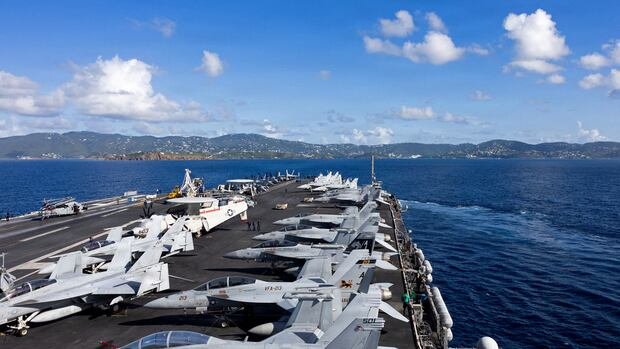

The Gulf of Venezuela saw a pair of U.S. Navy F/A-18 fighter jets flying over its waters on Tuesday, marking the closest American warplanes have ventured to the South American country’s airspace since the Trump administration’s pressure campaign began. The jets, revealed by public flight-tracking websites, spent over 30 minutes above the gulf, remaining in international airspace during their routine training flight, as confirmed by a U.S. defense official who spoke anonymously due to the sensitive nature of military operations. This exercise, aimed at demonstrating U.S. air capabilities, was emphasized as non-provocative.
In contrast to previous missions involving B-52 Stratofortress and B-1 Lancer bombers along Venezuela’s coastline, the F/A-18 fighter jets approached closer to the country’s territory. The U.S. military has bolstered its presence in the region significantly, conducting lethal strikes on suspected drug-smuggling vessels in the Caribbean Sea and eastern Pacific Ocean. While U.S. President Donald Trump hinted at forthcoming land attacks without specifics, Venezuelan President Nicolas Maduro contends that the U.S. military actions are intended to oust him from power.
Lawmakers are increasingly pressing the Trump administration for transparency regarding the boat strike campaign, which has resulted in at least 87 fatalities across 22 known strikes since early September. Requests for unedited strike video footage have been met with deliberation by U.S. Defense Secretary Pete Hegseth, who, along with U.S. Secretary of State Marco Rubio, provided a classified briefing to congressional leaders. The Pentagon is evaluating potential security risks associated with releasing the footage.
Amid mounting scrutiny, a bipartisan group of senators is poised to introduce legislation that would restrict Trump’s authority to use military force against Venezuela without congressional consent. Sen. Tim Kaine, sponsor of the legislation, expressed reservations about the legality of the military operations post a review of the classified legal opinion from the Department of Justice underpinning the boat strikes. Sen. Rand Paul called for a public hearing regarding the strikes, citing potential breaches of military justice codes in subsequent attacks on wounded individuals at sea.