
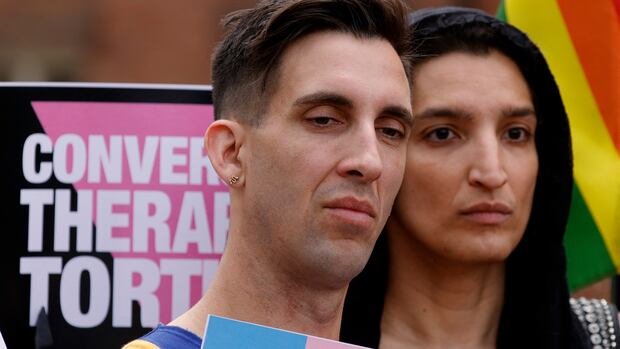

The recent decision by the U.S. Supreme Court has stirred controversy over the banning of conversion therapy for minors. While the court ruled in favor of free speech, a man who underwent conversion therapy himself stresses the importance of protecting vulnerable youth from potential harm. The ruling, in an 8-1 decision, overturned a 2019 Colorado law that prohibited licensed therapists from attempting to alter a minor’s sexual orientation or gender identity.
Conversion therapy, widely discredited as ineffective and even dangerous, has left a lasting impact on individuals like Simon Kent Fung from Denver. Fung, who delves into the subject in his podcast “Dear Alana,” shares the tragic story of a woman who took her own life after enduring years of conversion therapy. This ruling, according to Fung, eliminates a crucial safeguard for mental health, especially for those seeking solutions in vulnerable states.
The case was initiated by Kaley Chiles, a Christian counselor, challenging the ban as a violation of her free speech rights. The Supreme Court’s decision, authored by conservative Justice Neil Gorsuch, upheld Chiles’ argument, emphasizing the protection of free speech against government intervention in matters of thought and speech.
Despite the dissent from Justice Ketanji Brown Jackson, who defended Colorado’s law as constitutional, the ruling has raised concerns about the potential negative impact on states’ ability to regulate medical care. Various studies cited by the American Psychological Association highlight the lack of evidence supporting conversion therapy and its adverse effects on mental health, including increased rates of depression and suicide.
The ruling’s implications have sparked nationwide discussions, with advocates expressing fears about the well-being of LGBTQ+ youth. Despite the setback, individuals like Fung encourage those considering conversion therapy to explore alternative options beyond the divisive approaches that can lead to further harm and distress.