
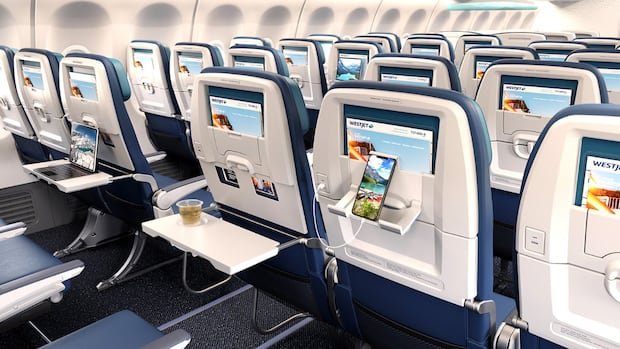

WestJet has decided to halt the implementation of non-reclining seats on a significant portion of its fleet following resistance from both employees and passengers. Initially announced in September, the plan involved reconfiguring the seating on 43 Boeing 737 jets to add an extra row and create various cabin tiers, some offering more space and higher-priced tickets than others.
Many economy seats in the new layout were to have reduced legroom compared to the previous setup and would feature a “fixed recline design,” preventing them from tilting back. However, an internal memo from WestJet’s vice-president Robert Antoniuk revealed that the new configuration will proceed on only 22 planes for now, with 21 of them already having the tighter interior.
In the interim, the Calgary-based airline will conduct a review and gather feedback from both guests and employees. Concerns were raised over the idea that passengers would have to pay for reclining seats or settle for static ones with less space, prompting discontent among passengers and flight attendants in recent months.
The Canadian Union of Public Employees highlighted the reduced legroom in a bulletin to its members, likening it to ultra-low-cost carriers like Spirit, Wizz Air, and Frontier. The union warned that the cramped conditions would pose challenges for guests with varying mobility, car seats, and pets, as well as limit overhead bin space despite an increase in guest capacity.
WestJet had previously announced plans to introduce multiple seating tiers on over 40 jets from subsidiaries like Swoop Airlines, Sunwing Airlines, and the now-defunct Lynx Air. This included installing premium seats and extended comfort seats with more space at a higher cost to cater to diverse passenger preferences.
While some praised the move as enhancing the guest experience, critics like aviation management professor John Gradek expressed skepticism, noting concerns about limited legroom. This shift in seating aligns with a broader industry trend of shrinking legroom and increasing fees for ancillary services, such as checked bags, seat selection, and onboard purchases, which have become significant sources of revenue for airlines.
Ancillary revenue, popularized by budget carriers and now embraced by major airlines, plays a crucial role in diversifying income streams and mitigating financial risks associated with fare fluctuations, fuel prices, and competition in the aviation sector.