
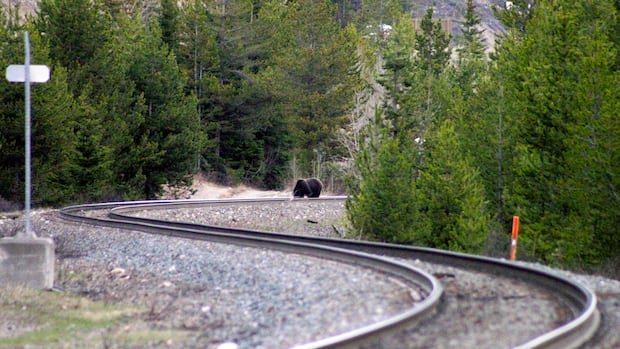

It can be a distressing experience to encounter an animal struck by a train. Jim Atkinson, a retired locomotive engineer, expressed his instinct to intervene upon seeing animals in danger on the tracks during his time working for Canadian National (CN). Over the years, Atkinson encountered various wildlife, such as elk, deer, and bears, on his route from Jasper, Alta., to Blue River, B.C. The memory of these incidents, especially when the animals were injured, lingered with him.
Railways serve as natural pathways for animals due to the ease of movement they provide. However, the significant stopping distance required for trains poses challenges in avoiding collisions if animals do not clear the tracks. A collaborative investigation by The Narwhal and CBC delved into wildlife collisions with trains in British Columbia, revealing numerous reports of incidents involving animals and trains from CN and Canadian Pacific Kansas City (CPKC).
Data inconsistencies and gaps in reporting hinder a comprehensive understanding of the issue. Wildlife advocates and scientists stress the importance of transparent and complete data to facilitate collaboration with railway companies in reducing animal fatalities. CN and CPKC reported hundreds of wildlife collisions, including those involving moose, bears, and other species, emphasizing the impact on wildlife populations.
Clayton Lamb, a scientist with Biodiversity Pathways, highlighted the devastating effect of train collisions on grizzly bear populations. Efforts are underway to address the issue, with experts proposing solutions such as reducing train speeds in critical areas where collisions are prevalent. Warning systems and improved data collection methods are also being explored to mitigate the impact of rail collisions on wildlife.
While progress is being made, challenges persist in implementing effective measures to prevent wildlife-train collisions. Collaboration between stakeholders, including Indigenous communities like the Yaq̓it ʔa·knuqⱡi’it First Nation, is crucial in finding sustainable solutions. The need for shared responsibility in preserving the environment and wildlife underscores the urgency of addressing this issue collectively.