
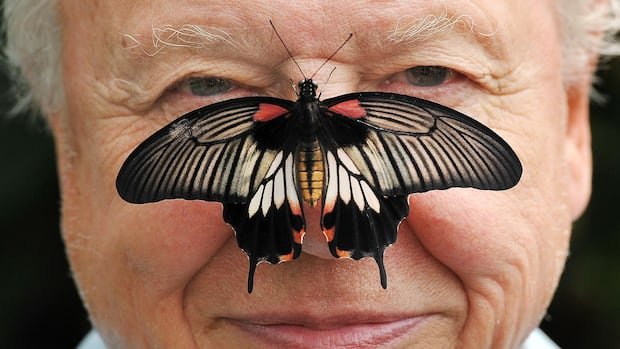

Sir David Attenborough, the renowned wildlife expert and broadcaster recognized for his distinctive voice and nature documentaries, is celebrating his 100th birthday on May 8. Over the years, he has captivated audiences with his documentaries like “Planet Earth,” “The Blue Planet,” and “Frozen Planet,” with his most recent release being the 2025 feature film, “Ocean with David Attenborough.”
Beyond his iconic narration and passion for wildlife, there are fascinating aspects of Attenborough’s life that may surprise you. Here are 10 lesser-known facts about him, one for each decade of his life.
Despite his love for animals, Attenborough harbors a dislike for one particular creature – rats. His aversion to rats stems from a harrowing experience during a storm in the Solomon Islands, where he encountered a rat in his sleeping quarters.
Attenborough’s influence extends beyond television screens, with more than 40 species bearing his name in his honor, including a butterfly, a miniature orchid, and a newly discovered wasp species named Attenboroughnculus tau.
In the 1960s, Attenborough played a pivotal role in changing the color of tennis balls during broadcasts by suggesting a more visible, bright yellow hue, enhancing viewers’ experience of watching tennis matches.
Having been knighted twice, first by Queen Elizabeth in 1985 and later by Prince Charles in 2022, Attenborough holds the prestigious title of Knight Grand Cross of the Order of St Michael and St George.
Attenborough’s illustrious career is marked by numerous accolades, including being the sole individual to receive BAFTA awards for programs in color, black and white, HD, and 3D formats. He also made history by winning a Daytime Emmy at the age of 99 for “The Secret Lives of Orangutans.”
In 2015, Attenborough set a record as the oldest person to descend 1,000 feet in a submersible to film segments of the Great Barrier Reef, showcasing his enduring passion for exploring the natural world.
During his childhood, Attenborough displayed an early fascination with nature by selling newts to the zoology department at the University College Leicester. His lifelong dedication to wildlife conservation and education is evident in his early entrepreneurial endeavors.
Despite receiving a high volume of fan mail, Attenborough remains committed to engaging with his audience through written correspondence. While he may respond to letters with a self-addressed, stamped envelope, he maintains a distance from social media platforms.
Attenborough’s groundbreaking documentary “Blue Planet II” in 2017 sparked a global movement against single-use plastics after highlighting the detrimental effects of plastic pollution on marine life. His advocacy for environmental conservation continues to inspire positive change worldwide.
Lastly, if Attenborough could embody an animal for a day, he humorously expresses a preference for a sloth due to their leisurely lifestyle. His enduring connection with nature and wildlife remains a cornerstone of his legacy as a respected advocate for environmental preservation.