
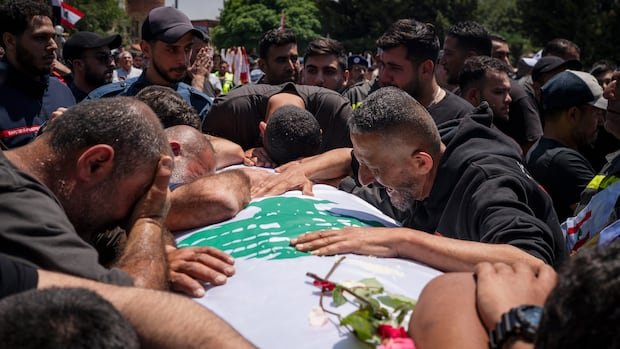

Nearly 21 days into a ceasefire facilitated by the United States between Lebanon and Israel, escalating assaults and expanding incursions are revealing significant flaws in an agreement that experts believe was never intended to completely stop the violence.
The arrangement was designed to temporarily halt renewed clashes between the two nations after Hezbollah attacked Israel on March 2 in support of Iran, the primary sponsor of the Shia militant group, which had been targeted by the U.S. and Israel starting on Feb. 28. Following this, Israel launched an incursion into Lebanon in March.
Despite the ceasefire being announced on April 16, the two sides have continued to exchange fire, with Israel issuing evacuation orders for numerous towns and villages in southern Lebanon since then. Recently, Israel conducted airstrikes on Beirut’s southern suburbs for the first time since the ceasefire came into effect.
This situation has led some political analysts to suggest that the agreement is largely symbolic, serving to contain the conflict rather than bringing a complete halt to hostilities.
The conflict between Israel and Lebanon has evolved into a secondary front in the broader U.S. and Israel campaign against Iran, with both ceasefire agreements being viewed as fragile and at risk of collapsing. While Tehran has insisted that any comprehensive resolution to the broader conflict must also address the fighting in Lebanon, Washington has maintained that these issues are separate. U.S. President Donald Trump has faced pressure to mediate a deal, potentially linked to negotiations with Iran and the desire to resolve issues in the Strait of Hormuz.
Similar ceasefire agreements in other regions, such as Gaza, have failed to sustain peace, with hundreds of casualties reported in Israeli attacks since the ceasefire in October 2025. Both sides have accused each other of violating the agreement.
The stability of the ceasefire is further complicated by Israel’s ability to achieve its objectives in the region. Despite intentions to neutralize threats like Hamas and Hezbollah, Israel’s military operations have not completely eliminated these groups as military threats.
The conflict between Lebanon and Israel dates back to the founding of the latter in 1948, illustrating deep-rooted issues that extend beyond any single ceasefire agreement. Efforts to disarm Hezbollah have faced challenges, with the Lebanese government aiming to implement disarmament plans while Hezbollah rejects these initiatives as serving Israel’s interests.
Hezbollah has vowed to continue striking Israeli forces as long as attacks persist in southern Lebanon, underscoring the ongoing tensions and distrust between the parties despite ceasefire agreements.
The current ceasefire in Lebanon serves as a diplomatic tool for the U.S., which is under pressure to resolve its conflict with Iran amid an energy crisis. Achieving a permanent peace deal between Israel and Lebanon is seen as a significant milestone, potentially contributing to the disarmament of Hezbollah and reshaping regional dynamics.
However, long-term peace in Lebanon remains uncertain without broader political agreements and resolutions to regional conflicts. The delicate balance between diplomatic efforts, military actions, and competing interests continues to shape the landscape of the Israel-Lebanon conflict.