
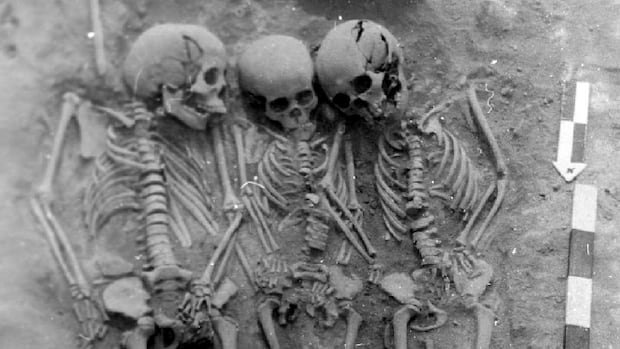

Scientists have unraveled a long-standing enigma surrounding the burial of numerous deceased children by ancient hunter-gatherers in Russia 5,500 years ago. The reason behind this phenomenon was the earliest documented outbreak of the plague caused by Yersinia pestis, shedding new light on the nature of the disease.
The study, recently published in Nature by an international team of scientists, unveiled that the bacterium Yersinia pestis, infamous for triggering the Black Death in 14th-century Europe, was already lethal to humans thousands of years earlier. Surprisingly, it had the ability to spread among hunter-gatherer communities rather than being limited to densely populated settlements.
Lead author of the study, Ruairidh Macleod, a postdoctoral researcher at Oxford University, expressed astonishment at the discovery of extensive deadly plague outbreaks among these early societies. This finding challenged previous assumptions about the reach of the disease.
For decades, Andrzej Weber, a professor of anthropology at the University of Alberta, and Angela Lieverse, a professor of archaeology at the University of Saskatchewan, have been examining remains from a prehistoric hunter-gatherer settlement near Lake Baikal in Russia. Weber heads the Baikal Archeology Project, a four-decade initiative unraveling the lifestyles of ancient seasonal communities engaged in fishing, hunting, and gathering along the lake and the Angara River.
Lieverse, specializing in the study of human bones, identified a notable anomaly two decades ago: a high proportion of children under 12 years old among the burials at one archaeological site, a rarity in the region. The team’s collaboration with Macleod, an ancient DNA expert, led to the groundbreaking discovery of the plague bacterium among the remains.
The plague strain identified in the study was particularly devastating to children due to the presence of a “superantigen” that triggered severe inflammatory complications, mainly affecting children. Interestingly, this strain lacked the genes necessary for the bubonic plague to spread through fleas.
The outbreak at Lake Baikal showcased human-to-human transmission, affecting multiple family groups. Tragically, DNA analysis revealed the deaths of three young girls aged seven to nine, who were found to be sisters and cousins. This discovery sheds light on the evolution and impact of deadly pathogens like the plague over time.
Lieverse emphasized the somber narrative revealed by the ancient remains and DNA evidence, underscoring the tragic toll taken by infectious diseases on early societies. The researchers highlighted the significance of understanding how such pathogens evolve and the potential implications for future outbreaks.