

In April 2024, the highly anticipated celestial event was the total solar eclipse visible in Eastern Canada and the U.S. Yet, the potential emergence of a new star, T Coronae Borealis (T Cor Bor), was the second eagerly awaited story. Although T Cor Bor already exists, it was projected to become visible to the naked eye by the end of the year. However, the anticipated brightening of the star did not materialize, leaving astronomers puzzled.
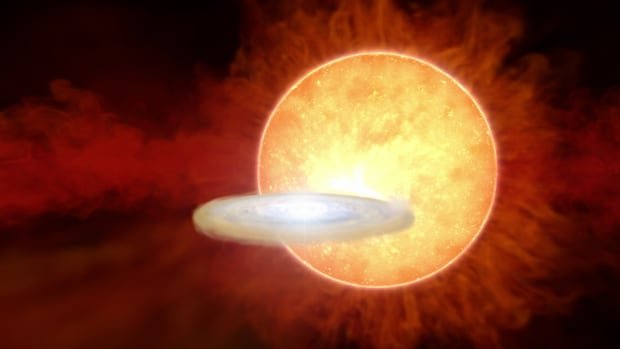
Astrophysicist Brian Kloppenborg, who is the executive director of the American Association of Variable Star Observers (AAVSO), highlighted the ongoing uncertainties surrounding the physics of the T Cor Bor system. Located approximately 3,000 light years away, T Cor Bor is part of a binary system within the Corona Borealis constellation, comprising a large red giant star and a small, dense white dwarf.
The interaction between the two stars involves material from the red giant transferring to the white dwarf, leading to a buildup that ultimately triggers a thermonuclear explosion known as a nova, resulting in the star becoming visible to the naked eye. This phenomenon occurs approximately every 80 years, with the last eruption recorded in 1946.
Despite predictions based on fluctuations in the star’s activity, the expected eruption did not occur as anticipated in 2024. Speculations from astronomers suggest varying eruption dates, with one study forecasting potential eruption dates in the near future, emphasizing the unpredictability of such celestial events.
Amateur astronomers have remained engaged in monitoring T Cor Bor, providing valuable observations to scientists. When the star eventually erupts, it is expected to brighten significantly before gradually dimming, remaining visible with binoculars for a period. The continuous monitoring and anticipation of the star’s eruption underscore the ongoing interest and dedication of the astronomy community.
As the scientific community awaits the eventual eruption of T Cor Bor, the vigilance and dedication of observers remain crucial in capturing this rare celestial event when it occurs.