
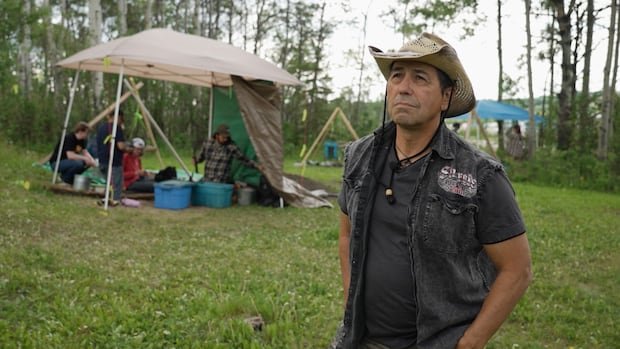

An archaeological field school located near Fort St. John, British Columbia, within a national historic site, is providing insights into 12,500 years of First Nations history by uncovering ancient stone tools and animal bones. The site, known as Tse’k’wa, is owned by Doig River, Prophet River, and West Moberly First Nations, whose Dane-zaa ancestors have long inhabited the area.
West Moberly Elder Laura Webb emphasized the ancient nature of the site, affirming the long-standing presence of the Dane-zaa people for over 12,500 years. Tse’k’wa is part of the vast collection of more than 57,000 archaeological sites in the province, showcasing the rich history of human settlement in North America since the last ice age.
The site serves as a platform for the nations to share their history, culture, and language with the public, offering an opportunity for visitors to learn about their heritage. The field school, primarily staffed by University of Northern British Columbia students, allows for hands-on exploration and learning experiences.
Tse’k’wa holds significance as a gathering place where cultural teachings are passed down, showcasing the harmonious relationship the indigenous people had with nature in the past. The area’s history includes the presence of long-extinct giant bison and ritualistic practices, as evidenced by the burial of two ravens, symbolically important in various Indigenous cultures.
Excavations at Tse’k’wa have unveiled a treasure trove of artifacts such as stone tools, animal bones, obsidian fragments, and a 10,500-year-old stone bead, a rare adornment discovered north of the Yucatán Peninsula. The findings align closely with the oral traditions and stories passed down through generations, reinforcing the cultural heritage of the Dane-zaa people.
The Tse’k’wa Heritage Society, established by the three nations in 2012, aims to preserve the site as an interpretive center for cultural teachings and community events. Visitors can explore the cave at Tse’k’wa, known as the “rock house” in the Dane-zaa Záágéʔ language, and learn about the site’s oral history and its archaeological significance.
Through the Tse’k’wa Heritage Society, the Dane-zaa people are reclaiming and sharing their cultural heritage with the broader community, connecting past practices with present-day traditions. The site stands as a testament to the enduring presence of the Dane-zaa people and their deep-rooted connections to the land.
Subscribe to CBC’s Fort St. John Weekly for a round-up of the best news and stories from B.C.’s Peace and Northern Rockies.