
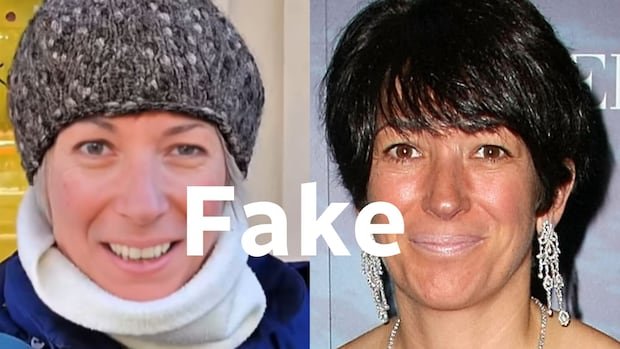

A video circulating online purportedly showing Ghislaine Maxwell, once linked to Jeffrey Epstein, casually walking in Quebec City has garnered widespread attention. However, the footage is confirmed to be a hoax. The individual who uploaded the video, a 19-year-old from Quebec City, admitted to using artificial intelligence (AI) technology to create the misleading clip. Despite warnings about the video’s artificial nature, viewers continue to engage with it, requesting access to the original footage to disprove the misconception that Maxwell is currently incarcerated in Texas serving a 20-year sentence for aiding Epstein in his illicit activities.
Concordia University professor Florent Michelot noted the unsurprising spread of conspiracy theories surrounding the video, likening them to easily digestible “fast-food for the brain.” The fabricated footage, showcasing a woman in a blue coat impersonating Maxwell, exhibits visible inconsistencies such as the activation of a filter and discrepancies in image resolution.
Maxwell is presently confined at Federal Prison Camp Bryan and is projected for release in 2037. Recently, she also made an appearance at a U.S. congressional hearing. The video’s proliferation on social media platforms, including being shared by Russian state-owned media outlet RT, underlines the public’s fascination with the false sighting. The video’s creator clarified through an Instagram post that their intention was satire rather than spreading misinformation.
While some viewers may attempt to identify deepfake videos by pinpointing glitches, Michelot emphasized the need for enhanced media literacy to navigate the deluge of online content accurately. He highlighted Belgium’s media literacy institution as a model for educating the public on media literacy, contrasting it with the lack of a similar initiative in Canada, where non-profits like MediaSmarts have taken on the responsibility.
Michelot cautioned against hastily dismissing all conspiracy theories, citing historical instances where seemingly far-fetched concepts were eventually proven true. He stressed the importance of critically evaluating past events, like the Epstein case, to understand how they shape contemporary narratives and public perceptions.