
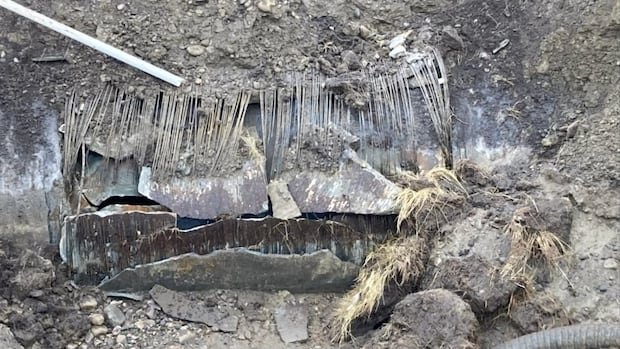

City officials in Calgary are concerned as water consumption remains high following a recent significant water main break. Mayor Jeromy Farkas stated that the city is still facing excessive demand, leading to a strained water system. The break in the Bearspaw south feeder main caused a drop in stored water from 600 million to 459 million litres daily.
Although there was a slight recovery in water levels, further conservation efforts are necessary to prevent depletion in case of future incidents, according to Michael Thompson, the city’s infrastructure services general manager. Residents are urged to reduce water usage by shortening shower times, minimizing toilet flushing, and running dishwashers and washing machines only when full.
Calgary’s manager of the drinking water distribution system, Chris Huston, highlighted that cutting just a minute off showers could save six to eight litres of water each. If every resident reduces their daily water intake by 10-30 litres, it would significantly aid in meeting conservation targets sooner. The city aims to repair the damaged pipe section within two weeks of the incident.
Businesses are also encouraged to decrease water consumption, with suggestions such as serving water to patrons only upon request and using bottled water. Sue Henry, Calgary Emergency Management Agency chief, acknowledged the inconvenience caused by the situation and emphasized the critical importance of reducing water usage at this time.
Areas including Montgomery, West Hillhurst, Parkdale, and Point McKay are still under a boil water advisory as a precaution. City officials admitted uncertainty regarding the cause of the recent water main failure and stated there is no absolute assurance against future breaks.
Plans to replace the Bearspaw south feeder main with a new steel pipe were already in progress before the recent incident and will now be accelerated. An acoustic fibre optic monitoring system is being utilized to detect any wire snaps that may indicate pipe deterioration, enabling prompt repairs. Despite previous assumptions of the pipe’s stability, only 18 snaps were detected compared to previous years, leading to the realization that the aging infrastructure needs an alternative solution.