
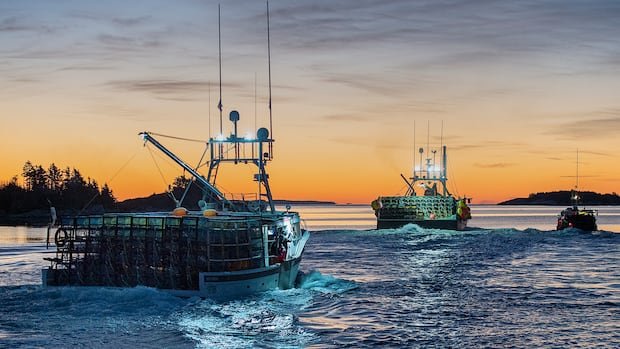

Lobster fishermen are optimistic about seeing increased prices this spring due to surging costs for fuel and other necessities. Martin Mallet, the executive director of the Maritime Fishermen’s Union, mentioned in an interview that the combination of a lower lobster supply and heightened demand resulting from the removal of international trade obstacles bodes well for improved prices. However, fishermen are facing difficulties due to rising expenses such as labor, insurance, equipment, and fuel.
According to Mallet, the price of diesel has significantly risen, reaching as high as $2.30 to $2.40 per liter in recent weeks compared to $1.40 to $1.45 per liter a year ago. To cover their expenses, fishermen are aiming for a shore price of at least $9 to $10 per pound. This is a significant increase from the $6 to $7 per pound they were receiving back in 2019 and 2018, reflecting the nearly doubled operational costs for fishermen in the Gulf of St. Lawrence and Nova Scotia’s eastern shore.
Ginny Boudreau, the manager of the Guysborough County Inshore Fishermen’s Association, reported that fishermen in her region are fetching around $12 per pound for their catches, indicating positive results. Lobster season has already commenced in parts of Nova Scotia’s eastern shore, with other fishing zones in Nova Scotia, New Brunswick, and Prince Edward Island set to open in the coming days and weeks.
In 2024, Canada exported approximately 80,365 metric tonnes of lobster valued at $2.9 billion, with the majority originating from the Maritimes. The United States, the largest buyer at $1.9 billion, and China at $535 million were significant importers. However, the sector faced challenges in March 2025 when China imposed a 25% tariff on Canadian crab and lobster in response to Canadian tariffs on Chinese goods, causing a significant drop in Chinese spending on Canadian lobster.
Despite these hurdles, Mallet mentioned that Chinese orders have been increasing with the removal of the tariff, indicating a positive outlook for the industry. Canadian live lobster exports were valued at about $215 million in the first two months of this year, showing a slight decrease from the same period in 2025.
Boudreau highlighted the impact of rising fuel prices on fishermen, emphasizing that it’s not just the cost of diesel impacting them but also the increased shipping costs for bait sourced from foreign markets. Amid trade uncertainties, efforts are being made to explore new markets for Canadian lobster beyond traditional buyers like the U.S. and China. Building relationships and ensuring market stability are crucial for the sector’s future success.
Mallet also noted that lobster catches have been decreasing in recent years, partly attributed to climate change. The warming ocean has pushed lobster populations northward to cooler waters, affecting catch sizes in southern areas like the Gulf of Maine.
In conclusion, despite challenges such as rising expenses and trade uncertainties, the lobster industry remains resilient, with efforts underway to navigate these obstacles and secure stable markets for Canadian lobster.