
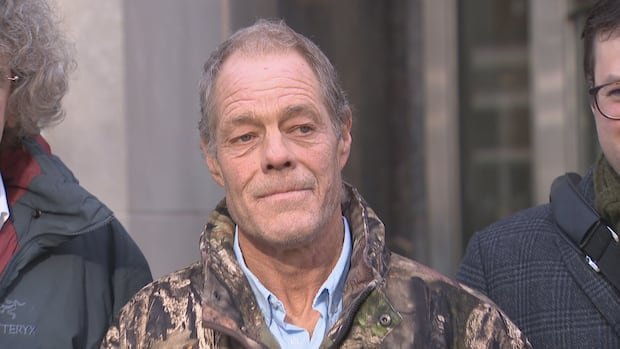

Prosecutors have decided to drop a second-degree murder charge against an individual who was imprisoned for 23 years for the 1989 killing of a 10-year-old girl. Timothy Rees, aged 62, had his conviction overturned by Ontario’s court of appeal, leading to the order for a new trial due to various complexities in the case, such as altered confessions, allegations of police collusion, and mishandled evidence.
Following remarks by two former federal justice ministers suggesting a potential “miscarriage of justice” during Rees’s original trial over three decades ago, the Crown was tasked with determining whether to pursue a retrial. However, prosecutors announced on Thursday that, considering the appeal verdict and the significant time elapsed, it was no longer in the public interest to proceed with the case.
Initially found guilty of second-degree murder in 1990 for the death of Darla Thurrott, Rees received a life sentence with no chance of parole for 15 years. Despite challenging his conviction, his appeal was dismissed in 1994, and the Supreme Court declined to review his case. Rees was granted day parole in 2009, followed by full parole.
The pivotal focus of the new appeal centered on a recording capturing a conversation between a police officer and the landlord of the building, which had not been disclosed to the defense. In the recording, the landlord, James Raymer, who resided in the same dwelling as Darla and her family, denied involvement in the girl’s death but made statements hinting at prior interactions with her, including suggestive remarks about encountering Darla on the night of her demise. The court ruled that the non-disclosure of this tape undermined the trial’s fairness by depriving the defense of crucial material to support its theory of an alternative suspect. Raymer, a Crown witness during the original trial, passed away in 1999.
Reacting to the Crown’s decision outside the courtroom, Rees expressed a mix of emotions, describing the end of a protracted and arduous battle. He emphasized the significance of having his name vindicated, albeit overshadowed by sorrow for Darla’s tragic fate and the absence of justice for her. Feeling aggrieved by the police’s withholding of the recording, Rees called for safeguards to prevent others from enduring a similar ordeal, lamenting the personal losses he suffered and his dashed hopes of having a family.
Looking ahead, Rees pledged to make the most of his life alongside his dog Blitz. His lawyer, James Lockyer, viewed the Crown’s decision as a conclusion to a lengthy saga, highlighting that a retrial would have posed significant challenges for the prosecution. Lockyer suggested that Rees should contemplate pursuing a civil lawsuit against the police and the justice system, acknowledging that the discovery of the crucial recording made the exoneration possible.
In a subsequent interview, Lockyer shed light on the circumstances of Rees’s alleged confession, emphasizing that it was coerced under distressing conditions. He expressed relief that the charges were retracted, concluding a protracted saga and enabling Rees to regain his dignity.