
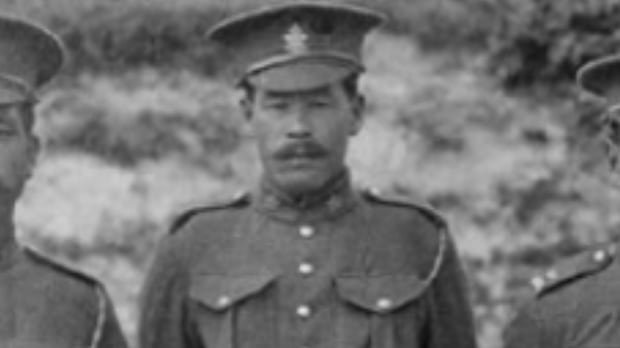

After a century of being largely unrecognized, the faces of Japanese Canadian veterans from the First World War are now showcased on the streets of Vancouver for the first time. A community historian dedicated over 15 years to researching archives, tracing descendants, and revealing the heroic deeds of these forgotten soldiers. Debbie Jiang, the historian, believes that these veterans deserve recognition for their selfless service that has been overlooked.
Jiang expressed her mission as a way of resurrecting the forgotten names and lives of these individuals who sacrificed everything with little to no remembrance. She described it as a tragedy that the stories of these soldiers were concealed due to a dark period in Canadian history that tainted their service. During the Second World War, Japanese Canadians, including veterans, were unjustly labeled as “enemy aliens” and forcibly relocated to internment camps in British Columbia, where their properties were seized and sold.
One such veteran, retired Private Otoji Kamachi, had his remarkable military career revealed to his grandson, Kelly Shibata, by Jiang. The journey to uncover Kamachi’s past shed light on his involvement in the First World War, where he, among others, enlisted despite facing systemic racism and discrimination. Kamachi and his fellow Japanese Canadian soldiers, many of whom were older than the typical recruits, bravely fought for Canada’s military rights, including the right to vote.
Despite enduring hardships and prejudice, the Japanese Canadian troops, including Kamachi, proved themselves as formidable soldiers on the battlefield. Kamachi served in the 52nd Battalion during significant offensives such as Vimy Ridge, Battle of Hill 70, Battle of Ypres, and Battle of Passchendaele, showcasing his bravery and dedication. Out of nearly 200 Japanese Canadians who served in the First World War, Kamachi was one of the survivors, although he suffered multiple gunshot wounds during his service.
Tragically, despite his contributions to Canada, Kamachi was among the Japanese Canadians uprooted and sent to internment camps during the Second World War. His belongings were confiscated, and he was forced into laborious conditions until the war’s end. Despite these injustices, Kamachi rebuilt his life as a farmer and raised a family, witnessing the eventual granting of federal voting rights to Japanese Canadians in 1948.
Although Kamachi passed away before receiving a formal apology and compensation for the wrongs done to Japanese Canadians during the war, his legacy lives on through his family’s pride in his military service. A banner featuring Kamachi and other Japanese Canadian veterans now stands in downtown Vancouver, serving as a tribute to their sacrifices and contributions to Canada’s history. Shibata, Kamachi’s grandson, expressed gratitude for the opportunity to honor his grandfather publicly and bring his family closer together through remembrance.
Jiang’s efforts aim to ensure that these veterans are not forgotten, urging the public to recognize and remember their names and stories. The images displayed on the streets of Vancouver serve as a powerful reminder of the bravery and resilience of these Japanese Canadian soldiers who fought for their country despite facing discrimination and adversity.