
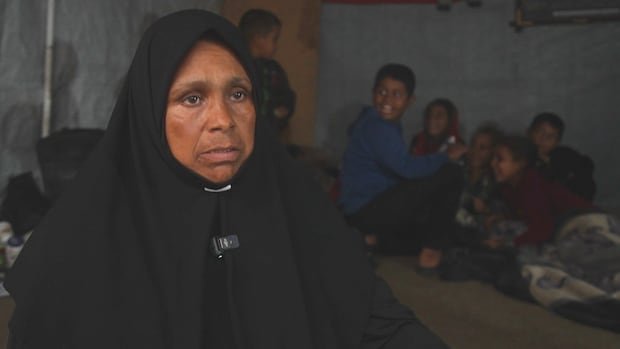

In Gaza City, Reda Aliwa, inside her makeshift shelter, is seen feeding her 36 grandchildren a single meal for the day, while they eagerly clamor for more. Following the tragic loss of her five children in two consecutive attacks in September, Aliwa and her husband are now left to care for the grandchildren amidst a fragile ceasefire in Gaza. The children are just a fraction of the estimated 40,000 youngsters in Gaza who have been orphaned, marking what the Palestinian Central Bureau of Statistics termed as “the largest orphan crisis in modern history.”
Aliwa, who was injured in one of the attacks and briefly fell into a coma, expressed her anguish upon waking to the devastating news of her children’s demise. Despite her own injuries, she left the hospital prematurely to prioritize the well-being of her grandchildren. The family, devoid of stable income sources, heavily relies on sporadic food distributions, but the scarcity of provisions remains a persistent challenge for Aliwa and her grandchildren.
Moreover, the children’s education has been severely disrupted due to the destruction of schools and universities during the conflict. The emotional toll on the children is evident, with Aliwa’s granddaughter, Ibtissam Aliwa, mourning the loss of her father and reminiscing about a once-joyful life now marred by tragedy.
As NGOs strive to provide support through temporary learning centers and psychosocial aid, the absence of comprehensive mental health care for children in Gaza remains a pressing concern. Aliwa’s daily struggles in an overcrowded tent, surrounded by rubble and enduring harsh living conditions, serve as a stark reminder of the family’s uphill battle toward survival in the war-torn region.
Living in close proximity to the ceasefire boundary, Aliwa and her family remain exposed to ongoing hostilities, hindering access to crucial aid and support services. The constant threat of unexploded ordnance and the challenges of navigating the conflict-ridden environment exacerbate the family’s predicament.
Aliwa’s fears for the future loom large as she contemplates the uncertain fate of her grandchildren in the absence of adequate resources and support. Despite her own profound grief, she shields the children from her tears, striving to provide a semblance of stability in their tumultuous lives. The resilience of Aliwa and her grandchildren, amidst profound loss and adversity, underscores the enduring struggles faced by many families in Gaza.