
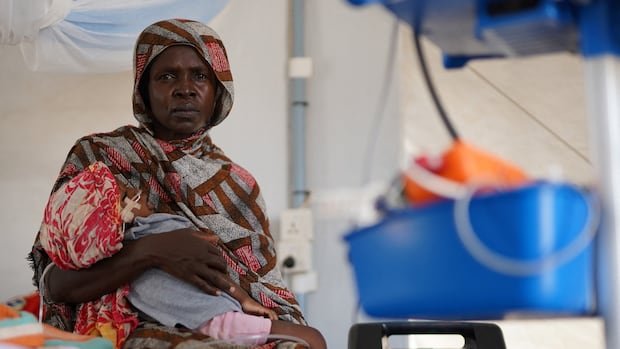

Sudan’s Rapid Support Forces (RSF) have accepted a proposal from the United States and Arab nations for a humanitarian ceasefire and are willing to engage in discussions regarding halting hostilities, according to a statement released on Thursday. Past attempts at ceasefires between the RSF and the Sudanese army have not been successful, despite various agreements over the course of their 2½-year conflict. The U.S. government, under President Donald Trump’s administration, has expressed its commitment to resolving the violence in Sudan.
The recent announcement from the RSF, to which the Sudanese army has not yet responded, follows the group’s capture of the famine-stricken city of El Fasher, which had been besieged for over 18 months and served as the final military stronghold in western Darfur. The RSF stated, “The Rapid Support Forces also looks forward to implementing the agreement and immediately commencing discussions on the arrangements for a cessation of hostilities and the fundamental principles guiding the political process in Sudan.”
While the army-led Security and Defense Council recently convened to discuss the proposal, a definitive response was not provided. However, influential figures and allies within the army have expressed reservations. A Sudanese military official, speaking anonymously to The Associated Press, mentioned that the army supports the proposal but insists on a complete withdrawal of the RSF from civilian areas and disarmament in line with previous peace initiatives before agreeing to a ceasefire.
Massad Boulos, a U.S. adviser on African affairs, indicated ongoing efforts by the U.S. to facilitate a humanitarian truce between the Sudanese army and RSF, with the possibility of an announcement in the near future. Boulos highlighted that discussions with both sides have been advancing for nearly ten days, aiming to finalize the specifics. The proposed plan, led by the U.S., entails a three-month humanitarian ceasefire followed by a nine-month political process.
The conflict between the RSF and the military commenced in 2023 following tensions between the former allies tasked with overseeing a democratic transition post a 2019 uprising. According to the World Health Organization (WHO), the warfare has resulted in the deaths of at least 40,000 individuals and the displacement of 12 million people. Aid organizations suggest the actual death toll could be significantly higher. Additionally, over 24 million individuals are facing acute food shortages, as reported by the World Food Program.
Humanitarian organizations have consistently highlighted Sudan’s dire displacement crisis, which intensified following the RSF’s takeover of El Fasher amidst relentless attacks. Reports from witnesses and the U.N. human rights office have raised concerns over the RSF’s alleged killings and abductions, with international condemnation labeling such acts as war crimes.
In response to allegations of misconduct, a high-ranking RSF commander dismissed the claims as media exaggerations and underscored ongoing investigations into potential violations by RSF members. The commander refuted accusations of killings, emphasizing the RSF’s facilitation of civilian evacuation and assistance calls to humanitarian groups.
Islamic Relief recently cautioned about the impending collapse of community kitchens, vital for numerous families, due to food shortages. A survey conducted by the organization revealed that 83% of households in east and west Sudan are currently experiencing food insecurity. The Integrated Food Security Phase Classification identified El-Fasher and Kadugli as regions facing famine, attributing the crisis to man-made factors such as conflict, insecurity, and restricted access to food supplies.
AbdulHakim Elwaer, the regional representative for Near East and North Africa, stressed the urgent need for safe humanitarian corridors to ensure food aid reaches vulnerable communities. He expressed optimism regarding ongoing talks to establish effective aid delivery mechanisms, underscoring the necessity to prevent hunger-related fatalities among millions of Sudanese in need.
This content was produced by a professional news writer as requested.