
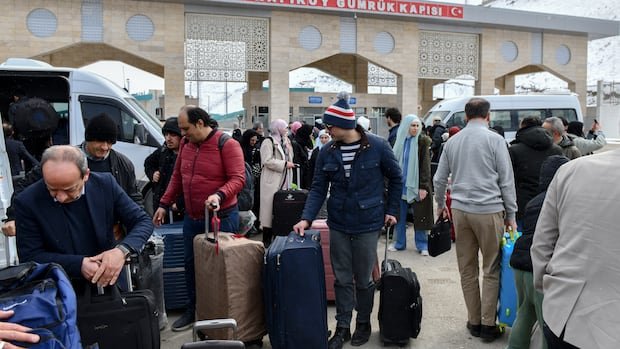

Omid Golabkesh was seen pulling his luggage along a lengthy corridor, signaling his departure from the Kapikoy border crossing in eastern Turkey. He had just completed a grueling journey, driving for 12 hours from Tehran to reach the checkpoint.
Situated in a mountainous area along the 500-kilometer border between Turkey and Iran, this border crossing is one of the three entry points from Iran, offering a glimpse into a country largely isolated from the world due to severe internet restrictions.
Upon stepping out into the bright sunlight and cold air, Golabkesh, like many others, initially displayed caution towards the gathered journalists and cameras. However, unlike most, he openly shared his full name, agreed to be filmed, and candidly expressed his views in Farsi, stating, “Iran is done. Iran didn’t care for its own people, and now people aren’t supporting Iran. The situation is so messed up… only God can help.”
CBC News has engaged with individuals who recently left Iran, including those present at the border and those who had moved to the city of Van, 100 kilometers away in Turkey. These individuals often spoke of fear, determination, and a yearning for peace amidst the ongoing crisis.
Following a series of airstrikes by the U.S. and Israel targeting Iran’s military, defense systems, navy, and top political figures, Iran’s state media confirmed the death of Supreme Leader Ayatollah Ali Khamenei on March 1, casting uncertainty on the future of the regime.
Many Iranians, interviewed by CBC News, expressed reluctance to speak publicly, fearing reprisals from Iran’s oppressive clerical regime, known for imprisoning and executing dissenters. The crossing sees a daily influx of individuals, including those returning from abroad by land due to airspace closures over Iran.
Numerous departures are driven by factors such as dual citizenship, family connections, or business opportunities abroad. One Iranian man, identified as Sam, recounted leaving his home in Tabriz under challenging circumstances, with the city experiencing partial shutdowns due to widespread fear.
Amid the escalating conflict, individuals like Bridget, an Iranian American, found themselves caught in the turmoil, with travel plans disrupted by unfolding events. The young woman, speaking from Van, described her harrowing experiences during the protests in Tehran, emphasizing the pervasive atmosphere of terror and chaos.
As the situation in Iran remains shrouded in uncertainty due to restricted information flow and media censorship, reports from humanitarian organizations indicate a rising death toll and extensive damage from the ongoing strikes. President Trump’s warnings and military actions have further heightened tensions, with a young Iranian woman highlighting the conflicting emotions of fear for her family’s safety in Iran and hope for a transformative change in the regime.
The turbulent events have prompted speculation about the future of Iran, with discussions on succession plans and interim leadership structures gaining prominence. Amidst the chaos, voices from the ground express a mix of apprehension, determination, and a fervent desire for freedom and change, underscoring the deep-seated aspirations of Iranians for a better future.