
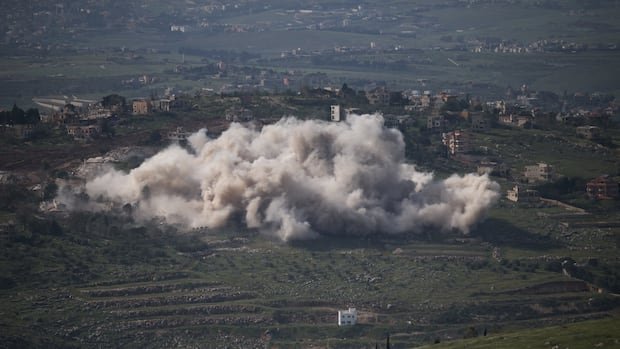

The Israeli military initiated airstrikes in eastern Lebanon on Monday, broadening its bombing operations despite a ceasefire that has not completely stopped hostilities with Hezbollah. These strikes in Lebanon’s eastern Bekaa Valley represent the first attack in the area since a ceasefire took effect on April 16, reducing the frequency of attacks but not entirely ceasing the fire exchanges.
Israel has maintained strikes in southern Lebanon and is holding a portion of the country’s south, targeting structures allegedly used by Hezbollah. Meanwhile, the Iran-backed Hezbollah continues its drone and rocket assaults on Israeli troops in Lebanon and northern Israel.
An Israeli military spokesperson stated that they have started targeting Hezbollah infrastructure in the Bekaa region and other areas in southern Lebanon. Security sources informed Reuters that strikes hit near Nabi Chit, close to Lebanon’s eastern border with Syria, with no immediate reports of casualties. Lebanon’s state media reported several strikes across the south resulting in at least three people wounded.
Hezbollah reported attacking an Israeli tank in southern Lebanon with a drone on Monday. The Israeli military confirmed that a Hezbollah-launched drone exploded near its troops in southern Lebanon, causing no casualties. According to Lebanon’s Health Ministry, at least 2,509 individuals have died in Israeli attacks across Lebanon since March 2, following Hezbollah’s assault on Israel in support of Iran, leading to Israeli military actions that devastated parts of southern Lebanon.
The conflict in Lebanon has intensified divisions among its people, particularly regarding Hezbollah’s weapons and potential peace negotiations with Israel. Lebanese and Israeli ambassadors to the United States have held two meetings to discuss the ceasefire, aiming to facilitate direct talks for a peace agreement between the two long-standing adversaries.
Hezbollah vehemently opposes direct negotiations, with leader Naim Qassem dismissing the talks as a “humiliating and unnecessary concession.” President Joseph Aoun of Lebanon has defended the government’s decision to engage in face-to-face discussions, indirectly criticizing Hezbollah for its role in the conflict.
Aoun emphasized that engaging in negotiations is not treason, contrasting it with the act of starting a war for external interests, seemingly referencing Hezbollah’s involvement in the regional conflict. He challenged critics by questioning whether national consensus was sought before engaging in war activities.