
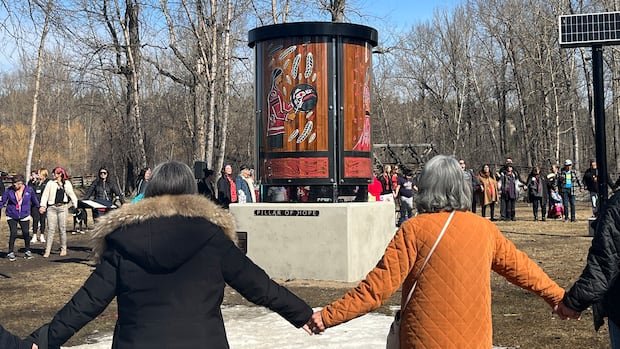

The unveiling of a monument named the Pillar of Hope at Cottonwood Island Park in Prince George brought together the families of missing and murdered Indigenous women and girls from the Highway of Tears in northern B.C. The monument pays tribute to those who have disappeared or lost their lives along the 720-kilometre Highway 16 corridor between Prince George and Prince Rupert since the 1960s.
Mary Teegee, the chief administrative officer of Carrier Sekani Family Services leading the project, described the moment as bittersweet, hoping the place would provide solace and peace to grieving families. Family members and supporters encircled the pillar during the ceremony, reading out the names of their loved ones, each name accompanied by the beat of a drum.
Brenda Wilson-John, whose sister Ramona was murdered in Smithers in 1994, emphasized the significance of the monument for healing and the emotional connection felt by families as they stood together, touched the pillar, and supported each other.
The Pillar of Hope, designed by artist Clayton Gauthier, was revealed on the final day of the 20th-anniversary Highway of Tears Symposium, which aimed to address the safety concerns and challenges faced by communities along Highway 16. Teegee stressed the ongoing need for vigilance and safety for Indigenous women and girls, emphasizing the importance of broader societal awareness.
The monument, comprising four cedar panels representing different seasons and intertwining various Indigenous cultures, serves as a symbol of remembrance and awareness not only for the victims’ families but also for the wider community. Plans are in place to install a similar pillar in Prince Rupert, named the Pillar of Strength, symbolically connecting both ends of the Highway of Tears.