
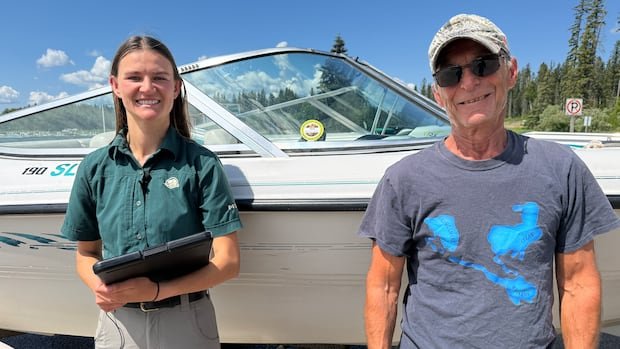

Parks Canada is seeking assistance from the public to prevent the spread of aquatic invasive species (AIS) in Prince Albert National Park (PANP). According to Sarah Mitchell, the PANP AIS project co-ordinator, the responsibility of halting the propagation of these species is a collective effort.
To impede the advancement of unwanted species, all watercraft entering the waters of Prince Albert National Park now require an AIS certification permit and compliance sticker. Any boat that has been outside the province within the last 45 days must undergo inspection and decontamination by Parks Canada staff at designated inspection stations. These mandatory inspections were initiated in 2025.
Visitor Colin Trudel expressed the importance of safeguarding the lakes, stating his concern about potential losses. The regulations aim to prevent invasive mussels like zebra and quagga mussels from infiltrating the park’s water bodies. These mussels’ larvae, known as veligers, are minuscule and invisible to the naked eye, with a single female zebra mussel producing around 1 million eggs annually.
The Ministry of Environment in Saskatchewan highlighted the substantial economic risks posed by invasive mussels to irrigation, water power generation, and municipal and industrial water usage. Notably, on July 3, veligers of invasive mussels were identified in the Lake of the Prairies, located about 67 kilometers east of Yorkton.
Sarah Mitchell emphasized the concern over stagnant water potentially transferring veligers from one location to another, even when not visibly present. At the PANP inspection station, Parks Canada staff meticulously examine watercraft for organic matter that could harbor AIS, such as mud, sand, and plants. A pressure washer with heated water is utilized to exterminate any existing aquatic invasive species.
Efforts to educate the public have contributed to enhanced compliance with AIS regulations. The certification process applies to various watercraft types, including canoes, kayaks, stand-up paddleboards, wind surfboards, inflatable boats, and rafts. These watercraft must be decontaminated if they have touched water, and specific compartments where water may accumulate must be cleaned, drained, and dried.
Non-compliance with AIS rules could lead to fines up to $25,000 under federal regulations. Parks Canada is currently formulating a comprehensive AIS plan in collaboration with Indigenous nations, community partners, and stakeholders to protect park waters effectively while enhancing visitor experiences.
Increased roving AIS inspections and staff presence at boat launches have been implemented at PANP. In 2025, PANP permitted 7,000 to 9,000 watercraft and conducted 160 decontaminations of high-risk watercraft. Invasive mussels have been observed in Manitoba and the southern United States, with zebra mussels previously discovered in Clear Lake in Riding Mountain National Park.
In Saskatchewan, invasive species like flowering rush and Prussian carp also pose a threat to native species. Prince Albert National Park has heightened its efforts to combat the spread of invasive species, enforcing strict measures and regulations to protect its pristine waters.